Engaging in Time: Smartwatches vs Traditional Watches
As we continue our journey into the digital age, an intriguing war is being waged on our wrists – the battle between the smartwatch and the traditional watch.
An emblem of technological advancement, the smartwatch is an alluring testament to how far we have come.
In contrast, the classic timepiece stirs memories of a simpler era — encapsulating the timeless essence of style and culture.
The question remains, however: which is more practical in day-to-day existence?
This article endeavors to explore this question, dissecting the practicalities, aesthetics, and societal implications of these contrasting yet co-existing wrist adornments.
Practicalities of Smartwatches vs Traditional Watches
One essential area to consider when discussing smartwatches and traditional watches is their practical application in everyday life.
Smartwatches bring a plethora of features to the table, far beyond mere timekeeping.
These gadgets can act as heart rate monitors, exercise trackers, GPS devices, miniature telephones, and even music players.
One could argue that the digital watch offers a portable convenience that surpasses its analog counterpart.
However, traditional watches have their own perks that often go unrecognized in the face of tech-savvy competition.
For one, a traditional watch’s battery life is months, sometimes even years, longer than that of a smartwatch which usually needs daily charging.
Moreover, they are often more durable, designed to perform their single function for years on end without issue.
Aesthetic Appeal: Contemporary Design vs Timeless Elegance
Recommended to our readers: Click here
Another significant point of contention is the aesthetic appeal of smartwatches versus traditional watches.
Smartwatches, designed with touchscreens and modern lines, reflect an embracing of contemporary technology and tend to appeal to those who value staying extraordinarily connected with the world around them.
They are indicative of the participant in the digital age, merging functionality with cutting-edge design.
On the other hand, traditional watches often represent classic style and enduring elegance.
The intricate craftsmanship that goes into creating a vintage timepiece often makes it a statement of personal style rather than just a utility item.
Traditional watches tend to carry a sentimental nostalgia, a throwback to times when things were less rushed and more cherished.
Socio-Cultural Implications: Technological Dependence vs Heirloom Significance
Lastly, assessing the societal implications of smartwatches as opposed to traditional watches provides further insights into their roles.
Smartwatches do enable a higher level of productivity and connectivity, but they also accentuate our escalating dependence on technology.
The constant presence of a device on one’s wrist that serves not only as a timekeeper but also as an extension of one’s phone or computer is worrisomely emblematic of the loss of unplugged, undistracted moments in life.
Alternatively, traditional watches often have a lineage that is absent in most smartwatches.
They hold the potential to be passed down generations, becoming cherished heirlooms.
Each watch tells a story — of the person who wore it, the periods it has seen, and the milestones it marked.
Traditional watches symbolize the human desire to remember, to hold onto time
The Evolution of Necessity: Practicality Explored
Recommended to our readers: Click here
Functionality undoubtedly plays a central role in our choice of wristwear.
Smartwatches promise an almost endless array of features – from email alerts to fitness tracking and GPS capabilities, they are a veritable Swiss army knife of wearable gadgets.
Traditional watches, in direct contrast, have a single primary function —to tell the time.
Some may argue this simplicity is their strength.
Instead of distracting us with notifications or encouraging us to constantly monitor our heart rate, they allow us to disconnect from the encompassing digital world.

In terms of battery life, traditional watches undeniably reign supreme, with a lifespan that often outlasts the wearer.
A smartwatch, meanwhile, struggles to deliver more than a day of power before it requires recharging.
Many a wearer has been caught out at inopportune times due to this limited battery capacity.
**Pros and Cons**
| **Pros of Smartwatches** | **Cons of Smartwatches** | **Pros of Traditional Watches** | **Cons of Traditional Watches** |
| — | — | — | — |
| Versatile Functionality | Requires Regular Charging | Simplicity | Single Function |
| Numerous Features | Can be Distracting | Longer Battery Life | Lack of Modern Features |
Versatility and Functionality of Smartwatches
Smartwatches have often been compared to mini-computers that you can wear on your wrist.
Their versatility has significantly broadened their appeal, enabling users to leverage a variety of functionalities that go beyond simple time-telling.
Icons of modern technological innovation, they provide access to a wealth of features like making and receiving phone calls, sending and reading immediate text messages, scrolling through social media notifications, and even making payments.
Furthermore, they often serve as extensions of our smartphones, characterizing a seamless blend of fashion, comfort, and convenience.
The Battery Life Challenge of Smartwatches
However, with great power comes greater responsibility – in this case, towards battery life.
Smartwatches require a substantial amount of energy to operate, often necessitating daily charges.
This creates a potential inconvenience for users, particularly when travelling or during days of heavy usage.
Dependence on regular charging serves as a deterrent for some prospective users, especially those seeking a wear-and-forget experience.
Embracing Simplicity with Traditional Watches
As our digital lives become progressively more complex, traditional watches provide an element of welcome simplicity.
They fulfill a single, basic function — to tell the time.
They stand as reminders of a time when this fundamental function was all that was required of a wrist companion.
Traditional watches are typically free of notifications, alerts, or buzzing alarms, allowing us a respite from the on-demand nature of the modern world.
Moreover, many users find an aesthetic beauty in the simplicity of traditional watches that just can’t be replicated by a digital display.
The tangible sensation of mechanical movement and the craftsmanship in every watch only enhance this appeal.
The Enduring Battery Life of Traditional Watches
Where traditional watches really shine is in the endurance of their battery life.
Some are wound manually, some are automatic, and many modern watches use a long-lasting quartz battery.
This provides an almost uninterrupted service life that can often span months or years without replacing the battery.
It’s even possible for a well-cared-for traditional watch to outlast its owner, becoming a cherished family heirloom passed down through generations.
Single Functionality: A Double-edged Sword?
Nonetheless, the single function nature of traditional watches can be seen as a drawback in an age where multitasking is a way of life.
As our digital ecosystem progresses, the lack of smart features on a traditional watch can feel restrictive.
Access to immediate weather updates, GPS
The Test of Time: Aesthetics and Customization
Recommended to our readers: Click here
A vital aspect we often overlook in judging a watch’s practicality is appearance.
After all, if a watch isn’t visually appealing, it likely won’t make it onto our wrist often, regardless of the functions it offers.

Here, traditional watches have an undeniable allure.
They represent classic design, the charm of analog mechanics, and a treasure trove of stories hidden within the hands ticking around their dial.
The smartwatch, futuristic and minimalistic, is a canvas upon which any style can be painted, thanks to interactive screen interfaces that teleport us to a diverse world of designs with a mere swipe.
The Allure of Classic Wristwatches
We cannot deny the unique appeal that traditional wristwatches bring.
For many, this is encapsulated by their representation of a bygone era, showcasing a classic design that’s both timeless and stylish.
The minute details of the intricate analog mechanics they house are a testament to the craftsmanship and skill of years past.
Recommended to our readers: Click here
The wristwatches developed over the decades each carry distinct designs reflecting the styles and trends of eras past.
From the ornate Art Deco designs of the 1920s and 30s to the minimalist styles popularized in the 1960s, each period left its distinctive mark on wristwatch aesthetics.
By choosing to wear a vintage watch, we not only recall this rich history but also make a statement about our appreciation for these designs.
Moreover, wearers often delve deep into the narrative that accompanies each watch piece’s journey.
Whether it’s a watch handed down through generations, a story of love and relationship, or the recollection of monumental history – every watch carries its own history and secrets that makes it unique.
The Modern Charm of Smartwatches
In contrast, smartwatches embody a more futuristic and minimalistic aesthetic that’s rapidly gaining popularity, especially among the younger demographics.
What they lack in classic aesthetic, they make up for in their raw customizability and functional capabilities.
Recommended to our readers: Click here
Smartwatches allow for a level of personalization not possible with traditional watches.
The interactive screen interface, in particular, is a modern canvas that allows wearers to adapt the smartwatch to their mood, style, or even daily activities.
For instance, if you’re off to a formal event, you can switch the interface to a classic clock face.
On a more casual day, you can choose a fun, colourful display that highlights your personal style.
The variety of additional functions that smartwatches offer could make them more visually appealing for users not solely interested in aesthetics.
Their capability to track exercise, receive notifications, or even make calls is changing the watch-wearing experience, elevating it from being a mere style statement to an integral part of one’s personal life and habits.
Whether it’s the traditional or smartwatch, it’s clear that aesthetics and customization play a crucial role in shaping our choices, preferences, and the frequency of use of such timepieces.
Recommended to our readers: Click here
They not only help us keep track of time but also reflect our personal style, tastes and in many ways, our identity.
Societal Implications: Status, Affordability, and Lifestyle Compatibility
Another key consideration comes into play: societal perception.
A traditional watch, crafted by prestigious houses — be it an elegant Rolex or a rugged TAG Heuer — is often seen as a status symbol reflecting the wearer’s accomplishments or lifestyle.
Smartwatches, while perhaps lacking the same cachet of luxury, embrace a societal shift towards connectedness and versatility.
This choice postulates the wearer as a tech-savvy mover and shaker with an eye towards future trends.
Affordability also figures into the discussion.
High-end traditional watches can cost a mini fortune, while a smartwatch is generally more affordable — providing a wider range of features with just a fraction of the cost.

However, vintage traditional watches have consistently increased in value over time, often appreciated as an investment.
Societal Perception: Traditional Vs. Smartwatches
The societal perception of watches is strongly influenced by the type, make, and model of the timepiece one chooses to wear.
A traditional, luxury watch, such as the Rolex Submariner or the TAG Heuer Carrera, speaks volumes about the wearer’s social standing.
It holds a certain prestige and aura of accomplishment, telling the world that its wearer has reached a position of luxury and influence.
In comparison, a smartwatch like the Apple Watch or Samsung Galaxy Watch offers a different perception.
It doesn’t necessarily denote financial success, but rather a preference for modernity, connectivity, and functional designs.
It suggests that the wearer is keen on staying updated with technological advancements and values the convenience and immediate access to information that a smartwatch provides.
Moreover, the wearer of a smartwatch is often seen as someone who appreciates health-tracking features, aiming for an active lifestyle while staying connected.
Affordability and Investment: The Cost Factor
A key factor that governs the choice between traditional and smartwatches is affordability.
Luxury traditional watches typically come with a hefty price tag, sometimes running into tens of thousands of dollars, making them an extravagance few can afford.
They cater to an affluent demographic with an appreciation for fine craftsmanship and timeless design.
On the other hand, smartwatches are generally more reasonably priced, more people can afford them for the sheer utility they offer.

While they may lack the long-term value appreciation like traditional watches, they present an array of modern features such as fitness tracking, notifications, music playback, and more, representing value for money.
However, traditional watches, particularly vintage models and limited editions, are known to appreciate in value over time.
They are often considered as much an investment as they are a functional accessory.
For instance, certain models of Rolex watches have been known to double or even triple in value over several decades.
In contrast, smartwatches, with their short technological lifecycle, are not seen as financial investments.
Lifestyle Compatibility: A Personal Choice
Ultimately, the choice between a traditional watch and a smartwatch may boil down to lifestyle compatibility.
For those who crave timeless elegance, sophisticated aesthetics, and an accessory that holds or appreciates its value over time, traditional watches are the undisputed choice.
Conversely, for individuals leading a digitally-connected life, preferring utility over luxury, and wishing for a gadget that can keep pace with their active lifestyle, a smartwatch is a
Making The Right Choice: Which is More Practical?
After extensive evaluation, the choice between a traditional watch and a smartwatch comes down to highly individual factors.
It’s a matter of personal style, intended habitual use, and the importance one places on connectivity versus simplicity.
Although the smartwatch offers an extreme range of features, it does retain potential drawbacks — including constantly needing to recharge and a possible sensory overload from never-ending notifications.
A traditional watch, in its simplicity and elegance, offers a tranquility and sophistication that a smartwatch simply cannot replicate.
However, it misses out on the convenience and utility that modern technology provides.
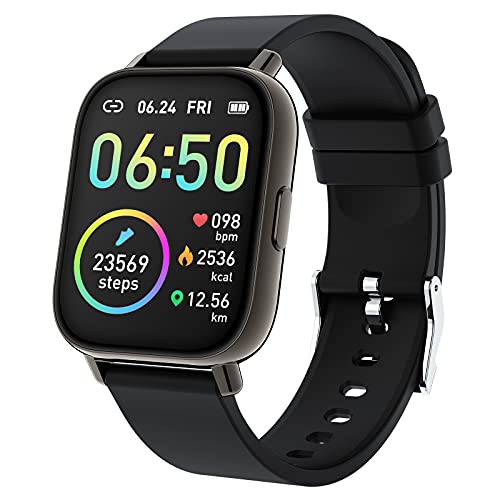
In reality, there’s no definitive answer to the question of practicality.
Both smartwatches and traditional watches have their unique strengths and weaknesses, and each caters to different lifestyles and personal preferences.
The most practical choice would be the one that suits the individual’s needs and wants — mirroring the pace, tone, and rhythm of the wearer’s life.
Examining Individual Preference
To delve deeper into the choice between a traditional watch and a smartwatch, it’s important to examine the user’s personal preferences.
Each person has unique needs and style.
For example, an enthusiast of classic products might prefer the understated elegance of a traditional watch.
Simultaneously, a tech-savvy individual might appreciate the multifunctionality of a smartwatch.
Both are valid choices reflecting personal styles and lifestyles.
Determining Habitual Usage
Habitual use plays a significant role in choosing a watch.
If a person is reliant on features like fitness tracking, notifications, or navigation, a smartwatch would serve them better.
However, if they are just looking for a device to tell time, and perhaps accessorize, a traditional watch would suffice.
Connectivity vs Simplicity
The connectivity provided by smartwatches is a wonderful convenience.
It can keep the wearer plugged into their work, personal life, or even their health metrics.
However, this same connectivity can burden the wearer with constant alerts, which can feel intrusive to some.
A traditional wristwatch, by virtue of its simplicity, promises a kind of tranquillity by escaping the frenzy of incessant notifications.
Analyzing the Drawbacks
Despite the versatile functionality of smartwatches, constant battery recharging can be a major drawback.
While some devices may last up to a week on a single charge, daily charging is the norm for most.
As for traditional watches, their battery life stretches to years, taking one concern off the wearer’s plate.
It’s here that traditional watches offer convenience of a different kind – the convenience of consistent service without too much maintenance.
Styles and Aesthetics
Traditional watches are a style statement.
With their elegance, and the craftsmanship they embody, they make for cherished heirlooms.
They’re more than just timepieces, encapsulating aesthetic and historic value.
On the other hand, smartwatches are a display of modern flair and tech enthusiasm.
They are current, useful, and reflect a fast-paced, technology-driven lifestyle.
Drawing the Line Between Practicality
The wide range of uses a smartwatch provides can be a boon.
Still, it wouldn’t hold much value for someone who doesn’t need its more specialized features.
Similarly, the elegance of a traditional wristwatch would be lost on someone who prioritizes functionality over form.
In the final analysis, practicality tends to become a subjective measurement – it’s a reflection of