Introduction: The Battle of the Giants
Once upon a time, a decision between Intel and AMD processors was likened to a ‘David vs Goliath’ story, but that’s no longer the case.

With both companies constantly outdoing each other with state-of-the-art technology, the gaming community frequently finds itself embroiled in arduous debates about which tech titan reigns supreme.
Both Intel and AMD have their diehard fans, and the reasons for their loyalty are as complex as the processors themselves.
Intel Versus AMD: The Perfect Rivalry
In the world of microprocessors, two names often emerge as the frontrunners: Intel and AMD.
These giants have remained close competitors for decades, each repeatedly revolutionizing the computing industry in their bid for supremacy.
The landscape of this battlefield, once dominated by Intel, has significantly shifted in recent years as AMD made stunning leaps in technological innovation.
The idea of David, the underdog AMD, surpassing Goliath, the industry titan Intel, has become a progressively feasible reality.
Behind the Tech Titans
As the larger and seemingly insurmountable force, Intel has carried the torch for producing some of the highest-performing processors in the world.
This tech giant’s reputation is cemented by having pioneered innovations, such as the x86 architecture, which is fundamental to modern PCs.
Intel’s dominance in the high-performance and server processor markets is unrivaled, and its brand has commonly been associated with quality and reliability.
On the other hand, AMD, the challenger, has always been recognized for offering good value for money.
They have been perceived as the people’s choice for providing budget-conscious consumers with affordable yet functional processor solutions.
But this adversary has stepped up from merely being a value offeror to becoming an innovation genius.
With the launch of their recent Zen architecture, AMD began to siphon market share, challenging Intel’s monopoly-like control over the industry.
The Battle Lines Transcending Gaming
Arguably, nowhere is the competition between these tech titans more visible than in the gaming community.
Emerging trends in gaming, such as virtual reality, game streaming, multi-platform compatibility, and 4K graphics, necessitate hardware that can quickly process and render high-definition visuals without latency.
Choices between Intel and AMD processors dominate discussions in gaming forums worldwide, as gamers seek to optimize their gaming rigs for the highest possible performance.
The Loyal Fandoms
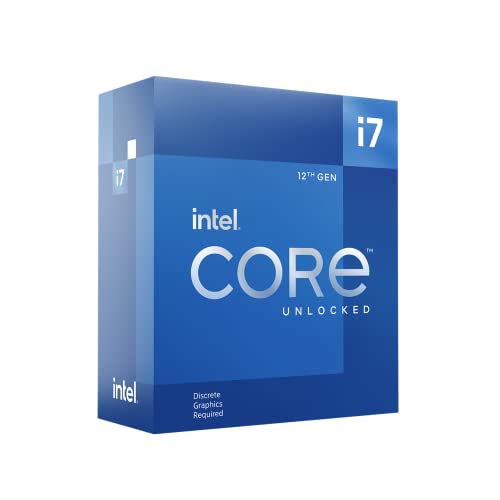
Much like any competition, both Intel and AMD have garnered legions of ardent fans who fervently endorse their preferred brand’s supremacy.
Their loyalty is often rooted in personal experiences, perceived value, brand resonance, and technological preference.
Some might value AMD’s disruptive innovations and strive for superior value, while others may remain loyal to Intel’s perceived robust performance and reliable track record.
This tribalism further fuels debates about the superior choice between Intel and AMD, rendering the decision even more complex than the technology underpinning these processors.
The modern rivalry
Intel: Legacy and Leadership
Intel, a tech titan revered globally, has long been synonymous with power, stability, and performance.
Widely recognized for its series of processors like the Intel Core i5 and i7, it’s a brand that’s dominated the CPU sector  .
.
This predominance is heavily grounded in unique technological features, such as hyper-threading technology—an Intel concept that improves multitasking efficiency and overall performance in gaming.
For instance, consider any serious gamer settling down for a marathon session of the latest and greatest first-person shooter.
Even with multiple game characters, NPCs, or AI controlled characters moving simultaneously in a landscape, hyper-threading allows for a smoother gaming experience by efficiently handling these multiple data streams.
For gamers, this translates into higher frame rates and unforgettable gaming experiences.
The Roots of Technological Dominance
The story of Intel’s dominance in the CPU sector is a journey that spans decades.
The company was founded in 1968 by Robert Noyce and Gordon Moore, two of the most highly respected innovators within the semiconductor industry.
Intel, over the years, has been at the vanguard of the microprocessor evolution which is the core component of any computer system.
The landmark product launch that marked a significant shift in the history of CPU design was the Intel 4004, the industry’s first commercially available microprocessor.
Hyper-threading: A Game-changer in Computing
Hyper-threading technology revolutionized the way CPUs function by introducing the concept of simultaneous multi-threading.
This technology allows the processor to handle twice as much information at the same time by leveraging unused processor resources.
It divides each physical processor core into two virtual or logical cores.
With the ability to process two data streams concurrently, hyper-threading improves processor throughput, enhancing system performance especially in tasks like video editing, 3D rendering, and, most notably, gaming.
A Deeper Dive into the Gaming Experience with Intel’s Hyper-threading
Hyper-threading has a profound impact on the gaming experience.
In digital gaming, every frame, every scene, every character generates a sizable amount of data that the CPU needs to compute simultaneously.
Recommended to our readers: Click here
Traditional non-hyper-threading CPUs tend to lag under such enormous pressure.
However, Intel’s hyper-threading CPUs are designed to manage multiple data flows far more efficiently.
Take, for example, a leading edge, graphic-rich first-person shooter where the gamer’s character is in a dense battlefield with a myriad of other players, numerous AI-controlled allies and enemies, and an intensely detailed environment.
Here, every element needs to be processed concurrently to ensure seamless gameplay.
Hyper-threading steps in and makes efficient computations which culminate in smoother in-game movements, greater responsiveness, and higher frame rates.
That’s the difference between natural, lifelike fluid motion and jagged, disrupted action sequences.
It enhances not just the performance, but the very experience of gaming itself, lending it a semblance of reality like never before.
The Future of Intel and Hyper-threading
Intel’s illustrious history of innovative solutions, coupled with its commitment to technological advancements, augurs well for the future of hyper-threading technology in gaming and beyond.
With the growing adoption of intense resource requiring applications in sectors like AI and cloud computing, the demand for
AMD: Rising Star in the Gaming Arena
But hang on.
There’s someone else on the horizon.
AMD, once considered an underdog  , is now a formidable challenger with its Ryzen line-up.
The latest AMD Ryzen series processors have not only managed to compete with Intel, they’ve even surpassed them in certain aspects.
A shining testament to this would be the AMD Ryzen 9 5950X, a 16-core, 32-thread powerhouse that’s been praised as one of the best gaming CPUs ever.
Ryzen chips also feature SMT (Simultaneous Multithreading Technology) that allows improved performance when multitasking or during heavy application usage.
Imagine hosting an online multiplayer gaming session – Ryzen’s SMT ensures games run without a hitch, with all players having a seamless and lag-free experience.

AMD Ryzen Line-up: More Than a Challenger
Recommended to our readers: Click here
The evolution of AMD from being cast as Silicon Valley’s eternally second-rate player to a formidable powerhouse is a narrative that cannot be overstated.
This massive breakthrough could largely be attributed to their revolutionary line of processors, the Ryzen series.
Not only has AMD managed to hold its ground against their long-time competitor, Intel, but it has also done what was once unthinkable – they have surpassed Intel in specific areas of performance.
A significant factor contributing to this dramatic upswing is the AMD Ryzen 9 5950X, a monstrous 16-core, 32-thread CPU that is seen as one of the greatest gaming CPUs to ever hit the market.
With a base clock of 3.4 GHz and a max boost clock of up to 4.9 GHz, the Ryzen 9 5950X is able to handle high-end PC games with remarkable ease, not to mention its impressive proficiency in handling multi-threaded tasks, such as video editing and 3D rendering.
The Innovation of Simultaneous Multithreading
Merely beefing up AMD’s hardware isn’t the only aspect that’s been a gamechanger for them.
The company has also been innovative with its integration of advanced technologies such as SMT (Simultaneous Multithreading).
Ryzen chips featuring SMT are able to handle multiple streams of data, making them excellent for multitasking.
To better understand how SMT works, consider a scenario where you are hosting an intense online multiplayer gaming session.
Tasks such as these would generally pose a strain on most CPUs.
However, with Ryzen’s SMT technology, these tasks are efficiently allocated across the processor’s threads, ensuring each task is executed without noticeable hiccups.
This ensures all players enjoy a seamless gaming experience with minimal lag, thus elevating the gaming experience to newer heights.
AMD and the Future of Gaming
The Ryzen series has solidly manifested AMD’s potential to redefine the gaming landscape.
The combination of powerhouse performing chips and forward-thinking technologies like SMT have established AMD not only as a serious contender within the gaming arena but also a trendsetter in high-performance computing.
The company’s astounding progress is a clear indication that AMD could be the one shaping the future of gaming.
With an increasingly competitive marketplace, gamers and tech enthusiasts alike can eagerly look forward to what AMD has in store for the gaming horizon.
Pros and Cons
Sure, here’s the elaboration:
Understanding the ‘Pros and Cons’ Concept
‘Pros and Cons’ is a commonly used term to clarify both the advantages (pros) and disadvantages (cons) of any particular situation or decision.
It is essential to look at the pros and cons before making a decision thoughtfully.
The Importance of Weighing Pros and Cons
Making decisions may be complex, and sometimes, the best options are not immediately apparent.
By listing down the pros and cons, we can systematically review our options and their potential impacts.
This methodology assists in preventing to overlook significant factors and aids in deciding rationally.
For instance, before buying a house, people generally make a pros and cons list.
The pros may include assets like equity build-up and stability, while cons may feature points like high upfront costs and potential for financial loss.
Pros: The Positive Side
The term ‘pros’ signifies the advantages or positive aspects.
They are reasons in favor of a particular decision or situation.
In the realm of decision making, pros can highlight the beneficial outcomes expected from a plan or choice, serve as convincing arguments during debates, and provide bases for advocacy on certain issues.
For example, the pros of exercise might include increased fitness, improved mental health, and a reduction in the likelihood of certain diseases.
Cons: The Negative Side
On the contrary, ‘cons’ speak about disadvantages or negative aspects.
They represent the potential setbacks or hindrances which come with a decision or situation.
From a decision-making perspective, laying out the cons helps anticipate potential challenges and enables damage control.
Let’s take the same example of regular exercise.
Some possible cons might be the time commitment required, the potential for injury, or even the financial costs if you’re considering a paid gym membership.
Importance of Equilibrium Between Pros and Cons
While making a decision based on pros and cons, it’s critical to weigh both sides with equal rigor.
Being overly optimistic can lead to a neglect of potential problems.
At the same time, focusing too much on cons may result in missed opportunities.
Balance is essential to make a thoughtful, informed choice.
For instance, if you’re considering a job offer, focusing only on the high salary (pro) might make you overlook potential cons like comprising work-life balance or possible stress level.
Similarly, only focusing on the long commute (con) might lead you to disregard the professional development opportunities the job might afford.
In conclusion, understanding the ‘
Intel
Intel’s popularity in the gaming world can’t be denied.
With clear winning points such as easy overclocking capabilities, excellent single-thread performance, and high base clock speeds, it’s a crowd pleaser.
However, their products typically come with a significant price tag, heating issues, and limited core counts in comparison to AMD.

Intel in the Gaming World
Intel, a market leader in computer processors, has always been on gamers’ minds due to its potency in the gaming world.
Known for its powerful performance and unmatched computational speeds, Intel has developed a loyal following among tech enthusiasts and gamers.
The company’s processors are designed to operate incredibly fast, enabling smoother gameplay and reducing lag or other gaming frustrations.
Take for instance the Intel Core i7-9700K, an 8-core processor known for its excellent single-thread performance.
It can clock speeds up to 4.9GHz on turbo boost, presenting a tantalizing prospect for any serious gamer.
This ability to handle higher clock speeds, especially considerations for overclocking capabilities, gives Intel an edge over their competitors, affirming their popularity among the gaming community.
Recommended to our readers: Click here
Overclocking with Intel
Overclocking refers to the process of pushing your computer’s processor beyond its default setting for a faster computational speed.
With Intel’s unlocked “K”-series CPUs, like the Core i9 or i7, users can modify the clock multiplier, thus raising the processor’s operating speed.
Intel’s processors are often lauded for their easy overclocking capabilities.
This means even novice users can give their gaming system an extra push of power for superior performance.
Gearing up with Intel’s High Base Clock Speeds
High base clock speed signifies the speed at which a CPU can execute the instructions of various applications.
Intel’s processors are well-known for their soaring base clock speeds, which subsequently gives gamers a boost.
For instance, the Intel Core i9-10900K, with a base clock speed of 3.7GHz, can reach 5.3GHz with Thermal Velocity Boost.
High clock speeds like these ensure that games run smoother, load quicker, and provide an overall better gaming experience.
The Pricing Conundrum
While Intel’s impressive technical specifications make it a stalwart in the gaming world, its higher price range could be a potential deal-breaker for some consumers.
Intel’s CPUs, particularly the high-end ones, have a hefty price tag attached.
For instance, the Intel Core i9-10900K costs significantly more than comparable AMD processors.
Recommended to our readers: Click here
This means that gamers looking for a cost-effective solution may find AMD a more attractive proposition.
Contending with Heating and Limited Cores
As with any sophisticated piece of tech, Intel’s processors aren’t perfect.
They tend to heat up significantly, particularly when overclocked
AMD
AMD, on the other hand, offers a great price-to-performance ratio, higher core counts, and excellent multi-threading performance.
But it falls short in areas like power consumption, where it needs a significant amount of power to function properly, and slower clock speeds compared to its Intel counterparts.
Price-to-Performance Ratio
One of the primary attractions for AMD’s products is their excellent price-to-performance ratio.
This essentially means that for each dollar spent, end-users can expect superior performance compared to most competitors.
For example, AMD’s Ryzen 7 3700X offers outstanding performance in comparison to Intel’s similarly-priced Core i7-9700K, making it an excellent value proposition for budget-conscious consumers who still demand high performance.
High Core Counts
AMD has consistently distinguished itself with a higher count of processing cores in their CPUs (Central Processing Units) compared to competitors at similar price points.
This is a crucial factor in multi-threading scenarios, where tasks can be efficiently distributed among many cores.
For example, the AMD Ryzen 9 3950X, with its 16 cores and 32 threads, significantly outperforms most of its counterparts in production tasks.
Multi-Threading Performance
The absence of simultaneous multithreading in many of Intel’s processors gives AMD an added advantage.
Simultaneous multi-threading allows each CPU core to work on two tasks simultaneously, effectively improving performance in multi-threaded tasks such as rendering and encoding.
This is where AMD’s CPUs supremely shine, providing excellent performance for the cost, especially in workstation applications.

Power Consumption and Clock Speeds
AMD processors generally consume more power than their Intel equivalents, which can be a potential drawback primarily for laptop users and those concerned with their energy footprints.
Additional power consumption means more heat, which can also necessitate pricier cooling solutions.
As for clock speeds, which is the speed at which a CPU can execute instructions, AMD has been slightly lagging behind Intel.
For instance, the flagship Ryzen 9 5950X has a base clock of 3.4 GHz while Intel’s Core i9-10900K starts at 3.7 GHz.
Although it’s worth noting that clock speeds aren’t the sole determinant of overall performance, they are a key factor in tasks that depend on speedy single-core performance.
Despite these potential shortcomings, AMD processors continue to appeal to consumers thanks to their excellent price-to-performance ratio, superior core counts, and exceptional multi-threading performance.
This versatility makes them well-suited to a wide array of tasks, from gaming to heavyweight industrial applications.
Key Features Table
| Processor | Core Count | Clock Speed | Overclocking Abilities | Performance |
|---|---|---|---|---|
| Intel | Lower | Higher | Better | Superior for Gaming |
| AMD | Higher | Lower | Good | Excellent for Other Multitasking |
Understanding Processor Specifications
The processor, often referred to as the central processing unit (CPU), can be viewed as the heart of a computer.
It’s responsible for retrieving, interpreting and executing instructions given to it by computer programs.
In this respect, the processor is the centerpiece of a computer’s performance.
Intel and AMD Processors
The two leading manufacturers of processors today are Intel Corporation and Advanced Micro Devices, Inc.
(AMD).
While both companies produce high-quality processors capable of handling various computer tasks, there are some significant differences in their specifications as shown in the table.
Breaking Down Core Count
The core count refers to the number of processors within a CPU.
More cores allow a CPU to handle more tasks simultaneously.
Thus, a high core count usually means better performance when it comes to multitasking or running intricate software like video editors.
AMD processors typically have a higher core count than Intel.
What’s Clock Speed?
The clock speed of a CPU determines how many processing cycles it can perform per second, which is often measured in GHz.
A higher clock speed usually equates to faster and potentially smoother system performance.
Intel chips often have higher clock speeds compared to AMD.
This makes them particularly good for tasks that require single-core performance, such as gaming.
Pondering Over Overclocking Abilities
Overclocking refers to the practice of increasing a CPU’s clock speed beyond its specifications to gain additional performance.
Recommended to our readers: Click here
This might be especially important for avid gamers or creative professionals who need every ounce of processing power they can get.
Intel chips generally have better overclocking abilities.
However, it’s important to bear in mind that overclocking can lead to increased heat output and power consumption, requiring adequate cooling systems.
Evaluating Performance
While Intel’s superior clock speeds and overclocking abilities make it a favored choice for gaming applications, AMD is not far behind.
In fact, for tasks that can take advantage of multiple cores such as video rendering, encoding or other heavy multitasking, AMD chips might actually come out on top.
Recommended to our readers: Click here
These differences should help guide you in choosing the right processor for your needs.
It’s not about which is universally better, but instead, it comes down to the specific requirements of your tasks and applications.
Conclusion: A Contest Too Close to Call
So, here’s where we land: the choice between Intel and AMD is arduously subjective and dependent on a variety of factors such as your game choice, budget, and specific performance expectations.
As the gaming world continues to evolve with both Intel and AMD ceaselessly innovating, one thing’s certain: the competition between the two will only serve to benefit the customers.
So whether you’re a diehard fan of Intel or a staunch supporter of AMD, rest easy knowing that the competition between these two tech titans is pushing them to develop groundbreaking products that will elevate your gaming experience to unimaginable heights.
Game on!
Assessing Your Personal Needs
One of the crucial aspects when picking between Intel and AMD is to assess your gaming needs and preferences.
For instance, do you tend to play more graphic-intensive titles that necessitate a robust graphics card or do you stick primarily to games that are more processing-focused?
The answer to this question will undeniably influence your decision.
What’s ideal for someone who primarily plays turn-based strategy games may not work as well for someone immersed in high-speed racing games or demanding MMORPGs that require robust processing power and high-quality graphics.
Financial Considerations
The financial factor heavily influences the choice between these two titans in the tech industry.
Historically, Intel’s high-performance CPUs have generally been more expensive than AMD’s, which leans towards delivering “more bang for your buck.” It is significant to compare the features and performance of each prospective unit against its price point to make an informed decision.
Looking at Benchmarks
For a more objective approach, gaming enthusiasts can look at the documented benchmarks for both Intel and AMD processors.
These tests compare everything from processing speed to graphical output to energy efficiency, providing a detailed overview of what you can expect from each piece of hardware.
Future Developments and Innovations
In this ever-evolving tech age, both Intel and AMD are ceaselessly aiming to outdo each other, thereby providing the added benefit to customers of better products and services.
A current example of this competitiveness is seen in AMD’s recently launched Ryzen 5000 series, which appears to have taken the lead in both gaming and computing tasks.
On the Intel side, the anticipation is building for the 11th Gen Rocket Lake processors that are rumored to bring improved architecture and increased performance.
The key here is to keep an eye out for what’s next in line, considering potential future purchases as part of the tech journey.
Technology as a Leveling Field
In the end, it’s thrilling to highlight that the back and forth race between Intel and AMD is bringing about a new era in the gaming industry.
Each advancement is creating a ripple effect leading to better PCs, laptops, and gaming consoles.
These technical leaps are helping to level the playing field for aspiring professional gamers, offer more immersive gameplay experiences for casual gamers, and usher in cutting-edge innovations for all tech enthusiasts.
Resting on the laurels of the competition between these two giants, the tech world is being pushed into undiscovered territories, and the customers are the ultimate winners.