Welcome to the Next Generation
Torn between the Xbox Series X and PlayStation 5, struggling with the agony of choice?
As the gaming world pivots into the next generation, console manufacturers are rolling out revolutionary gaming features, stunning graphics, and captivating storylines.
Today, we draw the line in the sand as we put magnifying glass on these gaming titans: Is Sony’s PlayStation 5 or Microsoft’s Xbox Series X better for gaming?
Detailed Overview: PlayStation 5 vs Xbox Series X
The battlegrounds are set.
On one side, we have the PlayStation 5 (PS5) from Sony, the Japanese behemoth, boasting robust specifications, breathtaking graphics, and an impressive library of exclusives.
On the other, we have Microsoft standing tall with its Xbox Series X, an epitome of powerful hardware, seamless user experience, and tight integration with PC gaming through the Game Pass.
Hardware Capabilities
Both consoles use a similar custom AMD Zen 2 CPU, with slightly different clock speeds that ultimately result in very similar performance.
However, while the Xbox Series X offers 12 teraflops of power, the PS5 checks in at 10.3 teraflops.
However, the real battle resides in how effectively these consoles are leveraging their capabilities.
Both consoles offer solid state drives (SSDs), something consoles have sorely needed for years, which drastically reduces load times and allows for larger, more complex game environments.
Software and User Experience
Sony’s PS5 introduces an entirely new user interface, the PlayStation Dynamic Menu, which provides players with an intuitive and seamless transition between different tasks and functionalities.
The PS5’s interface is designed to let players easily jump into games, download content, and even watch other players.
On the other side, Xbox Series X continues to use a more streamlined version of the Xbox One’s existing interface with its Xbox Velocity Architecture offering a smoother, more engaging user experience.
Exclusivity of Games
When it comes to exclusive titles, Sony’s PlayStation 5 undoubtedly has an edge over Microsoft’s Xbox Series X. Games like Demon’s Souls, Ratchet & Clank: Rift Apart, and Horizon Forbidden West are only a tip of the iceberg of what PlayStation 5 has to offer for exclusive content.
However, Xbox Series X isn’t bowing out easily.
With its recent acquisition of Bethesda and the forward momentum of Xbox Game Pass, a subscription service offering hundreds of games to play, Microsoft aims to redefine the rules of the game.
Price and Availability
For many, the ultimate deciding factor will likely come down to price and availability.
As of now, both consoles are comparably priced, with the PlayStation 5 Digital Edition and Xbox Series S offering more affordable alternatives.
However, due to supply chain restrictions and skyrocketing demand fueled by gamers worldwide, both these next-gen consoles are difficult to find.
The Verge of the Next Generation
As
Performance and Power
First, let’s rev under the hood.
The PS5 and Xbox Series X might resemble sizeable comm towers, but they both house incredibly powerful hardware.
The Xbox boasts a custom 8-core AMD Zen 2 CPU and a 12 teraflop GPU, tilting the power race slightly in its favor.
The PlayStation 5’s CPU is also AMD Zen 2, but its GPU reaches a maximum of 10.28 teraflops.
This doesn’t translate to a palpable performance gap you’d spot with a naked eye; both offer silky smooth 4K resolution at a blistering 60 FPS (frames per second) with the potential for up to 120 FPS.
Delving Deeper into the Specs
While both consoles employ an 8-core AMD Zen 2 CPU, the graphical prowess of the two systems shows a slight disparity.
Xbox Series X’s GPU, a custom-made unit from AMD, presents a total of 12 teraflops of raw graphics power.
For comparison, a teraflop refers to the computational capability of a processor, and it’s often used in the context of graphical power in gaming consoles or computers.
So, when we say a 12-teraflop GPU, we refer to an immense amount of power at the console’s disposal to render high-quality graphics.
The PS5, on the other hand, features a GPU that maxes out at 10.28 teraflops; however, the disparity in GPU capabilities does not directly translate to substantial differences in visuals between the two systems.
To get an idea of just how close they are, let’s consider the frame-rates and resolutions both consoles can handle.
Smooth Gameplay Experience
Both the Xbox Series X and PS5 are capable of pushing out an impressive 4K resolution at a consistent 60 frames per second.
This translates to incredibly detailed graphics coupled with buttery-smooth gameplay.
Gamers will appreciate the sharp, crystal-clear images and the seamless transition of frames that these consoles can muster, providing an immersive gaming experience.
Moreover, both consoles exhibit the potential for rates up to 120 FPS, which would mostly benefit gamers with displays capable of such high refresh-rates.
This heightened FPS rate delivers an even smoother visual experience, further reducing motion blur and providing incredibly responsive gameplay.
It’s Not Just about the Numbers
The numbers do show Xbox Series X slightly leading in raw power, but we need to remember that power doesn’t always directly translate to performance.
Each system’s developers optimize games uniquely, and various factors such as aesthetic style, narrative focus, or game mechanics lead to different visual outcomes.
Hence, while the minimal power difference might provide Xbox some edge in heavy-load situations, ordinary gaming scenarios won’t demonstrate a noticeable gap.
Both the Xbox Series X and PlayStation 5 indeed showcase a remarkable feat of technology, delivering power and quality that push the boundaries of home console gaming.
PS5 vs Xbox Series X Power
Whip out your microscope, and you might argue that the Xbox Series X’s higher GPU power gives it an edge, theoretically enabling more detailed graphics.
But, ‘real-world’ tests have shown that this minute power difference doesn’t necessarily equate to better game performance.
Games like ‘Devil May Cry 5: Special Edition’ have seen the PS5 often outperform the Xbox Series X in frame rates and resolution stability.
Detailed Comparison: PS5 and Xbox Series X GPU Power
When it comes to raw power illustrated by technical specifications, the Xbox Series X seems to win the game with its impressive specs sheet.
Xbox’s latest console boasts a custom 12 teraflop GPU, distinctly outshining the PS5’s 10.28 teraflop GPU.
On paper, this suggests richer details and more enhanced graphics on the Xbox Series X, theoretically providing better gaming visuals.
Recommended to our readers: Click here
Real-World Performance Versus On-Paper Specifications
However, as any seasoned gamer knows, technical specifics and actual gameplay don’t always align perfectly.
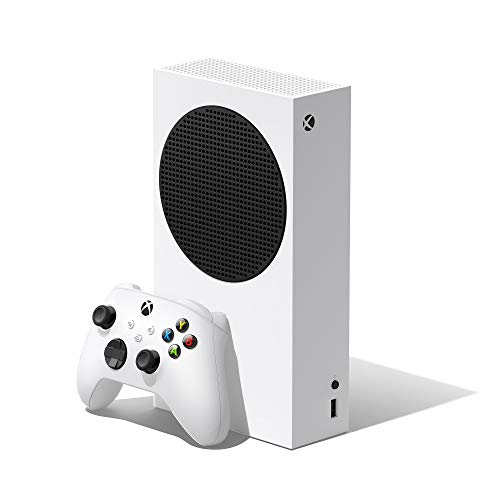
Practice has demonstrated that the PlayStation 5 can outpace its Xbox counterpart despite the lesser theoretical power.
For instance, many latest games tested on both consoles present the argument that the Playstation 5 outdoes the Xbox Series X in overall performance.
Evaluating the Gaming Experience: Devil May Cry 5 Special Edition
Take, for example, the popular game ‘Devil May Cry 5: Special Edition’.
In various tests, the PS5 displayed superior frame rates compared to the Xbox Series X. It’s interesting to note that the frame rates stayed stable even during the most graphic-intensive action sequences, providing a smoother and uninterrupted gaming experience to the users.

On Xbox Series X, although these sequences generally played well, there were a few instances of decreased resolution stability, especially when the gameplay demand increased.
This minor hiccup can lead to a disrupted gaming experience, proving that a droplet of extra power doesn’t always derive a better performance.
The Consolidated Verdict
While the Xbox Series X stands as a highly powerful console theoretically, the real-world performance of the PlayStation 5 proves to be a tough competitor.
The minor GPU power difference, when translated into practical user experience, does not guarantee the Xbox Series X an undisputed victory in the gaming arena.
Instead, the PS5 often demonstrates equal or superior game performance, making the choice between the two consoles about more than mere statistics.
User Interface
Aesthetics being highly subjective means deciding which interface is superior ultimately depends on personal preference.
The Xbox Series X maintains a user-friendly dashboard similar to its predecessor, with dedicated tabs for home, games and apps, store, and social features.
PlayStation 5, however, presents an entirely revamped UI, pairing the XrossMediaBar with some freshness and positively a more immersive feel.

User Preference and Aesthetics in Interface Design
A crucial part of understanding user interface design lies in the concept of aesthetics, where personal preference heavily comes into play.
That is, there are no universally accepted standards that dictate an ‘ideal’ interface design.
What is aesthetically pleasing or functionally efficient for one individual may not resonate with another.
This divergence in tastes makes the debate around preferred interfaces a widely subjective matter.
The Continued Elegance of Xbox Series X’ User Interface
In the gaming world, different platforms appeal to users’ preferences in different ways.
Xbox Series X, for instance, stuck with a user-friendly formula with its dashboard interface that primarily maintains the design from its predecessor.
This essentially includes dedicated tabs for diverse functional categories such as the home screen, games and apps, store, and social features.
This decision has been highly praised owing to the simplicity of navigation it offers, allowing the user to swiftly switch between programs and applications.
Moreover, the layout of Xbox Series X’s user interface is known for its accessibility and practicality.
It is designed with an efficient navigational scheme that hooks players with its lucid design language.
Gaming aficionados appreciate the streamlined layout as it directly connects them with their favorite games, shopping preferences, and social interactions within a few easy clicks.
This simplicity also enhances the user’s gaming time by reducing the navigation time between different tabs.
Recommended to our readers: Click here
PlayStation 5’s Fresh Take on User Interface
On the other hand, PlayStation 5 brought a breath of fresh air to its user interface design.
It amalgamated the classic function of the XrossMediaBar (XMB) with innovative design elements thus creating a more immersive experience.
PlayStation 5’s UI transformation from PlayStation 4 finds a balance between familiarity and novelty.
This blend has allowed users to quickly adapt to the new design while enjoying some of its fresh elements.
The PlayStation 5 has reimagined the function of various interface tools that promote a more engaging interaction between the user and the interface.
Its intuitive design contains dynamic menus and slick stylistic effects that take interface aesthetics to new heights.
Coupled with the XrossMediaBar’s classic functionality, PlayStation 5’s UI makes the gaming journey more vivid, capturing the attention of its users.
However, the silent beauty of this refurbished UI structure is not just about aesthetics but also about an enhanced gaming journey the console promises.
Some gamers may argue that the emphasis on immersion and appealing design can sometimes overcomplicate the navigational experience
Xbox Series X vs PS5 UI
Ultimately, the decision here boils down to the classic debate: familiarity versus innovation.
The Essence of Choices: Familiarity versus Innovation
The choice between Xbox Series X and PS5 User Interfaces (UI) does not exclusively rely on physical appearances or gaming lineups, but also minutiae aspects like the UI.
At the heart of this choice is a perennial debate users and consumers are often faced with – sticking to what you already know and are comfortable with (familiarity) versus opting for something fresh and novel (innovation).
Recommended to our readers: Click here
The Xbox Series X, for instance, maintains much of the ties with the UI design of its predecessor, the Xbox One.
The focus for the Xbox Series X UI has been on refining and perfecting the existing structure rather than introducing radical changes.
This is the epitome of familiarity, with Microsoft betting on their users appreciating the consistency and comfort of a familiar navigation system, whilst integrating subtle improvements based on users’ feedback and technological advancements.
The Case for PS5: Freshness Over Everything
On the other hand, PS5 has ventured into the realm of innovation with its completely revamped and novel UI design.
This UI represents a new metaphor in gaming console interface design, dipping its toes into the unknown waters of experimentation and innovation – a sharp contrast to Xbox’s conservative approach.
The PS5 UI boasts off new features like the Control Center, which provides instant access to system-level functions and in-game activities, something completely novel in the realm of console gaming.
The User Perspective: Making The Choice
To some, the Xbox Series X’s commitment to providing a known and improved experience might sound appealing.
They yearn for the comfort zone where they don’t have to struggle with the learning curve associated with a new UI.
Essentially, Xbox Series X offers the illusion of an old friend, someone you can rely on in presenting you with your favorite titles in familiar surroundings.
Meanwhile, others may be captured by the PS5’s daring break away from the previously established routes.
The promise of a unique and novel experience reigns supreme for these users.
They are ready to explore the new features, navigate through different menus, and make the most out of their gaming experience.
In conclusion, the choice between Xbox Series X and PS5, especially in regards to their UI, presents an intriguing case study for designers and users alike.
This familiar debate presents a critical lesson about the importance of understanding the user base, their needs, preferences, and their willingness or hesitancy towards change and novelty.
Game Library
Boasting a legion of phenomenal games, the Xbox Series X seems apropos for anyone enamored by Microsoft’s backlog, offering attractive Game Pass subscriptions.
Conversely, Sony champions the exclusivity card, holding to ransom titles like ‘Spider-Man: Miles Morales’, ‘Demon’s Souls’, and the upcoming ‘Ratchet & Clank: Rift Apart’.
The PlayStation 5 certainly seems the console for gamers seeking unique, boundary-pushing titles, even though the Xbox pulls in with a more generous subscription service.
Microsoft’s Extensive Game Pass
One of the key strengths of Xbox Series X is the broad array of games available through their Game Pass subscription.
From AAA titles to indie classics, Microsoft’s vast library caters to all kinds of gamers.
They’ve demonstrated an ongoing commitment to nurturing this library, acquiring numerous game development studios and consistently adding new games to the roster.
Their Game Pass is recognized as a very consumer-friendly model, where quite a small monthly fee provides access to a substantial range of games.
There’s another noteworthy feature of the Microsoft’s Game Pass– numerous games are available to play on the day they launch.
This means subscribers have no need to pay full price for these games, making the Game Pass a highly appealing choice for budget-conscious gamers.
Exclusivity Matter: Sony’s Strategy
On the other side of the console war, Sony’s PlayStation 5 is building its stronghold on the exclusivity of its titles.
Sony’s approach has always been focused on developing high-quality, unique games that can only be played on their console, effectively creating a compelling reason to purchase their system over others.
The high anticipation around their exclusive games like ‘Spider-Man: Miles Morales’, ‘Demon’s Souls’, and the upcoming ‘Ratchet & Clank: Rift Apart’ are testaments to this strategy’s success.
The exclusivity strategy has not only allowed Sony to produce highly innovative and boundary-pushing titles, but it has also enabled them to establish strong brand loyalty among gamers.
Sony’s reputation for exclusive games with intricate narratives and novel gameplay continues to draw players into their ecosystem.
Gaming Experience: Xbox Series X Vs. PlayStation 5

The PlayStation 5 and Xbox Series X both offer distinct benefits to gamers.
For those who value the opportunity to explore a wide variety of games without breaking the bank, the Xbox Series X and its generous Game Pass subscription stand out.
Conversely, for gamers dedicated to experiencing one-of-a-kind narratives and progressive gameplays, the uniqueness promised by PlayStation 5’s exclusives provides a significant drawcard.
Both Sony and Microsoft have their own strategies to thrive in the gaming industry, thereby offering different propositions to gamers.
This rivalry is pushing the boundaries of gaming innovation, resulting in several groundbreaking games and making it a golden era for video game enthusiasts.
Xbox Series X vs PS5 Games
At the end of the day, the most aesthetic interface or the most robust piece of hardware pales in comparison to the main attraction – the games themselves.
Xbox Series X and PS5: Catalysts of Enthralling Gaming Experiences
Nothing quite equates to the thrill of quality games for gaming enthusiasts.
No matter how immersive an interface or how advanced a console is, it serves a primary purpose – a vehicle to deliver extraordinary gaming experiences.
Xbox Series X and Playstation 5 are no exceptions.
At the crux of their rivalry is not just impressive hardware specifications or eye-catching UI, but their ability to lure gamers with captivating titles.
Epic Game Libraries: The Distinguishing Factor
Both Xbox and Playstation have an array of remarkable games to their names, where each gaming library features a potpourri of genres.
Xbox Series X, for example, adds value to its lineup with popular franchises like Halo, Forza, and Fable as well as some exciting new titles like Hellblade 2 and Avowed.
On the other hand, PS5 boasts exclusive titles such as Spider-Man: Miles Morales, Demon’s Souls, and Ratchet and Clank: Rift Apart, each just as captivating as the next.
How Games Drive Hardware Development
The devices’ impressive features are secondary to game development.
For instance, Xbox Series X’s Quick Resume feature was designed with the gamer’s convenience in mind.
It allows them to jump back to their game at a moment’s notice even after a system shutdown, making interruptions less intrusive.
This very feature is inconsequential without the presence of the fun-filled games it supports.
Similarly, Playstation 5’s DualSense controller brings an elaborate haptics system that can mimic different sensations, significantly amplifying the in-game experience.
Yet, without games like Astro’s Playroom that take full advantage of this feature, it would be rendered insignificant.
The Importance of Exclusive Titles
Exclusive games are key players in the console war between Xbox Series X and Playstation 5.
They help each platform build a distinct identity and entice players into their ecosystem.
An Xbox gamer may be swayed towards PS5 because of the enthralling narrative and gameplay experience offered by action-adventure title ‘The Last of Us Part II’, which is exclusive to Playstation.
Vice versa, the groundbreaking graphics and in-depth storyline of Xbox’s ‘Halo Infinite’ might just be the reason for a player’s switch from PS5 to Xbox.
The Promise of Future Games
Further heightening the competition are the promised future games on both platforms.
While Microsoft talks of leveraging its acquisition of Bethesda to bring more exclusive titles to
Pros and Cons
Having analyzed these consoles’ specific elements, we now keenly dissect their advantages and disadvantages.
Gaming Console Comparison & Analysis
An in-depth comparison between different gaming consoles necessitates a comprehensive dissection of each console’s specific elements such as graphics quality, user interface, exclusive game titles, online services, and accessories.
Only by fully understanding these characteristics can we regard any product as superior or inferior in this fiercely competitive market.
Pros: Advancement in Gaming Technology
One notable advantage and hallmark of current gaming consoles is the advancement in gaming technology.
As we can see with the PlayStation 5’s ray-tracing technology, the console can handle heavy graphical tasks more efficiently, ensuring games are more immersive and visually stunning.
Not to mention, the high-speed SSD that PS5 offers which drastically reduces load times enhances gameplay experience.
In contrast, the Xbox Series X, with its advanced processing power, is a testament to next-level gaming performance offering comfortable 4k gaming at 60FPS and even up to 120FPS for some titles.
Such advancements are reshaping the gaming experience, bringing gamers closer to the realm of virtual reality.
Cons: High Costs and Accessibility
On the flip side, one of the main drawbacks from the perspective of many consumers often revolves around the high initial costs and the continuing expenses incurred with regular game purchases, maintenance, and online services.
In markets outside the United States, the reality of unavailability or scarcity of these consoles exacerbates the cons.
Console Exclusives: Bliss and Bane
Further, the practice of console exclusives, while offering a unique advantage to specific models like the PlayStation’s ‘Spider-Man: Miles Morales’, also poses a dilemma for gamers who may have to invest in more than one console to play all their favourite titles.
Similarly, Microsoft’s acquisition of Bethesda and its exclusive rights over popular franchises like ‘Elder Scrolls’ and ‘Fallout’ sparks the same hurdle for PlayStation enthusiasts.
This exclusivity war between consoles, while offering diversity, often ends up being a significant disadvantage to many gamers.
In summary, an objective analysis of gaming consoles helps illustrate the plethora of benefits they offer, while also highlighting potential drawbacks.
Understanding these pros and cons can guide gamers in their decision-making process when considering which gaming console best fits their preference, budget, and requirements.
Xbox Series X Pros
– Slightly more powerful
– Support for 1TB storage expansion cards
– Game Pass subscription offers excellent value
More Power
While both the Xbox Series X and its closest competitor, the Playstation 5, are considerable steps up from their previous generations, the Xbox Series X edges out slightly in terms of raw power.
It runs on a custom 8-core AMD Zen 2 CPU and an RDNA 2-class GPU.
This combination offers unparalleled rendering speeds and a much-improved frame rate, delivering a smoother and more responsive gaming experience.
The Xbox Series X boasts 12 teraflops of computing power, which is more than enough for most games to run at 60 frames per second at 4K resolution.
Storage Expansion Support
One note-worthy pro of the Xbox Series X is the support for 1TB storage expansion cards.
The console comes with an ample 1TB of built-in SSD storage.
However, modern games are becoming larger and require more storage space.
For gamers who wish to have an extensive collection of games installed and ready to play at all times, the Xbox Series X offers an added option to easily expand the storage capacity.
The 1TB storage expansion cards plug directly into a dedicated port on the back of the system, which means no more managing external cables or power bricks.
The Game Pass Subscription
Among all benefits, the Game Pass subscription is the one that offers the most bang for the buck.
For a relatively low monthly fee, the Game Pass offers access to an ever-growing library of over 100 high-quality games ready to be downloaded and played.
These include first-party Xbox games available at no extra cost on the day they are released and a range of third-party titles as well.
With the subscription, there’s always something new to play, offering excellent value for regular gamers.
Not only that, but the Game Pass also offers members discounts on game purchases and add-ons, making it a must-have for ardent Xbox gamers.
Xbox Series X Cons
– Less impressive exclusives
– Higher-powered GPU doesn’t equate to better game performance
The Downside of Less Impressive Exclusives
One major con of the Xbox Series X has to be its lack of strong exclusives compared to its competitors.
Exclusives games are ones that can only be played on a particular platform, which often serve as the primary selling point for many consumers when they’re deciding between different gaming consoles.
The potency of impressive exclusives has been evidently displayed by the likes of PlayStation and Nintendo, both known for their strong roster of exclusive games such as the “Spider-Man”, the “Last of Us” series for PlayStation and “The Legend of Zelda”, “Super Mario” series for Nintendo.
These games have enjoyed critical acclaim and advertising that frequently creates a major incentive for gamers to choose their consoles.
In contrast, Microsoft’s track record for exclusives on the Xbox Series X has been less than stellar.
While it has had a few standout exclusives like the “Halo” series, the overall lineup pales in comparison.
The gap becomes apparent when you consider that one of the major upcoming exclusives, “Halo Infinite”, has been delayed multiple times, leaving the Xbox Series X library looking a bit bare.
Higher-Powered GPU Doesn’t Always Indicate Superior Game Performance
Another potential drawback of the Xbox Series X is the misconception that its higher-powered GPU equates to a significantly better gaming performance than its competitors.
A GPU, or graphics processing unit, is pivotal to rendering images, animations, and videos in games.
The more powerful the GPU, the better these functions are expected to perform.
Contrarily, having a superior GPU doesn’t always result in better game performance.
It doesn’t necessarily mean that games will run smoother or look better on the Xbox Series X. The quality of a game is not solely impacted by the hardware, but it is equally determined by the developers and how well they optimize their game for that particular platform.
Recommended to our readers: Click here
On paper, the Xbox Series X does have a more powerful GPU, which should help it run high-definition games at high frame rates more efficiently.
However, the optimization of titles, the quality of game development, and how developers utilize this power also play considerable roles in how a game runs and looks.
This can often result in multi-platform games providing similar experiences across platforms despite the hardware differences.
Therefore, while the Xbox Series X does shine in terms of raw specs, these technical advantages don’t necessarily make a major difference in real-world game performance when compared to its rivals.
PlayStation 5 Pros
– Innovative UI
– Exemplary cooling system
– Exciting exclusive titles
Innovative UI
Starting with the innovative User Interface (UI), it is safe to say that Sony has outdone itself on this front with the PlayStation 5.
The sleek and streamlined design of the UI carries a futuristic aesthetic.
Smooth transitions and animations add a touch of sophistication.
Notably, the Control Center design impressively caters to the user’s needs by keeping most used features right at fingertips.
The PlayStation 5’s UI also maximizes gaming advantages, being highly immersive and interactive.
For instance, the Activities feature offers potential for easier achievement of gamer goals, and hints for premium members, enhancing the overall gaming experience.
Exemplary Cooling System
Advancing to the cooling system, Sony has incorporated a revolutionary cooling solution to tackle the issue of overheating, a commonly faced problem by hardcore gamers and prolong hours of playing.
The PlayStation 5 feats an enormous 120mm double-sided fan which spans across the entire length of the console, efficiently distributing the airflow evenly and keeping the components cool.
Additionally, liquid metal thermal conductor has been applied to the custom CPU, which greatly aids in reducing heat, thereby ensuring that the system runs smoothly even under heavy load.
These thoughtful considerations to create an effective cooling system eliminate the frequent complaint of noisy fans that plagued previous models.
Exciting Exclusive Titles
Last, but most certainly not least, are the exciting exclusive titles.
PlayStation has always been known for its impressive lineup of exclusive games, and the PlayStation 5 is no exception to this tradition.
The console features a variety of highly anticipated titles including “Demon’s Souls”, “Spider-Man: Miles Morales”, and “Ratchet & Clank: Rift Apart” which are absolutely captivating seasoned gamers and newcomers alike.
Also, the PlayStation 5’s backwards compatibility feature allows access to a majority of PlayStation 4 titles, which guarantees a rich and diverse gaming library for players.
This exclusive selection of games is a testament to Sony’s ongoing commitment to providing unique and immersive gaming experiences.
This alone sets the PlayStation 5 apart from gaming competitors, solidifying its position in the console market.
In conclusion, it is quite clear that the PlayStation 5 serves as a monumental leap forward in the gaming industry, courtesy of its innovative UI, effective cooling system, and diversity of exclusive game titles.
It’s not just about providing gaming entertainment, but elevating the user experience to new, unmatched heights.
PlayStation 5 Cons
– Less raw GPU power
– Storage not as easily expandable
Lower GPU Power
One of the primary criticisms against Sony’s PlayStation 5 is the system’s overall lower raw GPU power.
The GPU (Graphics Processing Unit) is the component responsible for rendering images, animations, and videos in your games.

On paper, when comparing the technical specifications between consoles, the PlayStation 5’s GPU is slightly underpowered compared to its substantial competitor, Xbox Series X.
According to the tech specs, Sony’s PlayStation 5 has 10.28 teraflops of computational power, while Microsoft’s Xbox Series X boasts a slightly more powerful 12 teraflops.
Recommended to our readers: Click here
This difference suggests that theoretically, the Xbox Series X could handle rendering-intensive tasks a bit more easily.
This disparity might lead to minor differences in visual performance and could affect the console’s ability to run future graphics-demanding games effortlessly.
Storage Expansion Limitations
Digital games, applications, and system updates constantly demand increasing storage space, making the issue of storage expansion a significant one for gamers.
Unfortunately, PlayStation 5’s storage expansion is not as user-friendly or straightforward as other gaming consoles.
The PlayStation 5 comes with an 825GB SSD, of which only 667GB is available to the user due to system files.
Though 667GB might initially seem like plenty of space, modern games’ file sizes can easily surpass 50GB, making that storage amount quickly fill up.
The PlayStation 5 does support the expansion of storage using M.2 SSDs, but it’s not as straightforward as it sounds.
Firstly, the console supports only specific models of M.2 SSDs that satisfy Sony’s required performance criteria.
Secondly, expanding storage via M.2 SSDs on your PlayStation 5 involves manually opening up your console, which can be a daunting task for a lot of users who are not tech-savvy.
On the contrary, Xbox Series X offers proprietary storage expansion cards, developed in collaboration with Seagate, that can be easily inserted into a dedicated slot on the console, making storage expansion a breeze compared to the PlayStation 5.
These constraints make PlayStation 5’s storage less easily expandable and a potential drawback for many users.
Key Feature Comparison
| Feature | Xbox Series X | PlayStation 5 |
|---|---|---|
| CPU | 8-core AMD Zen 2 | 8-core AMD Zen 2 |
| GPU | 12 teraflop | 10.28 teraflop |
| Storage | 1TB NVMe SSD | 825GB NVMe SSD |
| Resolution | 4K at 60 FPS, up to 120 FPS | 4K at 60 FPS, up to 120 FPS |
| Price | $499 | $499 |
CPU and Processing Power
Both the Xbox Series X and PlayStation 5 have made significant upgrades to their central processing units (CPUs), boasting 8-core AMD Zen 2 processors.
This is a substantial increase from their respective predecessors and puts both consoles at par with each other in terms of raw processing power.
This cutting-edge CPU architecture enables both consoles to support heavy, complex, and visually immersive gaming experiences.
Recommended to our readers: Click here
GPU and Titanic Graphical Capabilities
GPUs are crucial for bringing to life the rich and vivid worlds of modern games.
Here, the Xbox Series X slightly edges ahead with its compute power of 12 Teraflops, compared to PlayStation 5’s 10.28 Teraflops.
While both consoles are more than capable of rendering high-quality visuals, the marginally superior GPU of the Xbox Series X might give it an edge in scenarios where games are extremely graphics-oriented.
However, this difference may not necessarily translate to a perceptible improvement in everyday gaming, as the quality depends on how game developers make use of the resources.
Storage and Game Load Speeds
The Xbox Series X comes with a standard 1TB NVMe SSD, which slightly outpaces the PlayStation 5 that has an 825GB NVMe SSD.
However, the difference in storage size doesn’t necessarily reflect a huge advantage.
Both NVMe SSDs represent a significant advancement over past HDD driven systems, meaning faster game load times, and smoother in-game asset streaming for both consoles.
Also, PlayStation 5’s throughput is technically higher, which could signify faster load times for games.
Resolution and Smooth Gameplay
Both systems support a gaming resolution of 4K at 60 FPS, with the capacity to ramp up to 120 FPS.
This means they are built to handle high-definition, smooth, and jitter-free gameplay.
These high frame rates are crucial for best experience in fast-paced competitive games where every frame can make a difference on gameplay outcomes.
Price and Value
The Xbox Series X and PlayStation 5, priced equally at $499, offer a similar value proposition in terms of hardware capabilities.
Their shared price point suggests that the choice between the two will likely come down to factors like brand loyalty, exclusive game titles, controller design, and additional ecosystem-centric features each platform offers.
Their similar financial commitment arguably levels the playing field for prospective buyers, making the console war quite interesting to witness as it evolves around game offerings and community services.
Conclusion: Defining Perfection
Pitting these two gaming behemoths against each other paints a vivid picture: a closely contested affair that leaves little room for a decisive verdict.
As you stood on the battlefield, watching these titans trade blows, it inevitably dawned on you – the ‘better’ console is incredibly subjective.
It lies at the intersection of personal gaming preferences, budget, and brand loyalty.
But one thing’s for sure: whether you’re Team Blue or Team Green, the future of gaming looks exciting indeed.
Looking Through the Lens of Personal Gaming Preferences:
Personal gaming preferences play a crucial role in defining one’s choice of console.
The types of games you prefer, whether they are first-person shooters, survival horrors, role-playing, or platform games, may influence your decision to lean towards one console over the other.
Some gamers may be attracted to the exclusive titles offered by Sony’s PlayStation, while others may find their gaming bliss in the wide range of backward-compatible games offered by Microsoft’s Xbox.
Let’s not overlook the importance of game performance and graphic capabilities.
For some gamers, a console’s ability to deliver stunning high-resolution graphics with smooth framerates could be the deciding factor.
On the other hand, others might prioritize a console’s unique features, such as the PlayStation’s VR capabilities or the Xbox’s Quick Resume functionality.
Balancing Budget with Desire:
A console’s cost is often another critical factor in choosing between these gaming giants.
Different models come with varying price tags and offer differing experiences.
For the budget-conscious, a console’s appeal often lies in its value proposition – how much gaming quality and reliability are packed into each dollar spent.
For example, while the PlayStation 5 and Xbox Series X come with impressive specs, their more budget-friendly counterparts, the PlayStation 5 Digital Edition and Xbox Series S, might present more attractive options to those on a budget, yet wanting a taste of next-gen gaming experience.
Brand Loyalty – A Weighty Equation:
Brand loyalty also significantly influences the console war.
Lifelong fans of certain consoles typically have considerable emotional investment tied in with their chosen brand.
This loyalty builds over time, stemming from positive experiences, cherished gaming memories, and a sense of identity formed around a gamer’s console of choice.
Having enjoyed a particular console’s ecosystem, satisfied gamers are often more likely to stick to the same brand.
Whether you’re loyal to Sony or Microsoft doesn’t change the fact that this riveting competition between the two leads to progressive innovation in the gaming sphere.
As each of these powerhouse brands strives to outdo the other, new and exciting technological advancements are introduced, keeping the future of gaming bright and full of potential.
The Takeaway
In summary, defining the better console is far from a clear cut task; it’s a subjective debate that’s shaped by an individual’s gaming preferences, financial limitations, and brand loyalties.
By acknowledging these factors, we can appreciate that gaming consoles are more than just machines; they’re platforms that cater