Introduction: A Modern Charging Conundrum
With technology propelling at an exceptional stride, customers are often left bewildered by the influx of new peripherals and gadgets.
One such feel of ambivalence surrounds the debate of USB-C vs Lightning cables – which one charges faster.
In the era of quick charging phones, the significance of this discourse is felt more keenly.
Understanding the Tech Wave
Technology today is moving at an exceptional pace, surpassing human comprehension and becoming a harbinger of change.
Every day, there are new gadgets and peripherals being churned out, each attempting to outdo the other in terms of features, functionality, and user-friendliness.
From smart refrigerators that plan your meals to voice-activated virtual assistants that organize your day, there’s a bewildering array of tech available.
Amid such rapid technological advancements, it’s only natural that consumers often feel both excited and daunted by the sheer volume of devices they have to choose from and the different specifications each one comes with.
The Great Charging Debate: USB-C vs Lightning Cables
One such example of this modern tech conundrum is the debate surrounding USB-C and Lightning cables.
As anyone who owns a smartphone, tablet, or other rechargeable devices can tell you, the charging capabilities and speed of your cable can significantly impact your device’s use.
In the race of fast recharging, it becomes essential for users to discern between the two types of cables: USB-C, a universal charging standard gaining momentum due to its widespread compatibility, and Lightning cables, a proprietary Apple charging standard known for its secure and efficient power delivery.
To the uninitiated, these technical terms may sound baffling, leading to confusion about which charging cable is truly superior.
This is especially relevant today, in an era where our lives are propelled at a breakneck pace and we can scarcely afford to spend more than a couple of hours recharging our cherished devices.
The Increased Significance of the Charging Debate
The USB-C vs Lightning cable discourse isn’t just a trendy tech debate.
It carries substantial weight and foretells the future of our fast-charging world.
As devices and applications become increasingly power-hungry, the need for efficient and fast-charging cables skyrocket.
As we step further into the digital age, users are tasking their devices with many multiple sophisticated tasks, from high-definition video streaming to complex gaming, requiring high battery consumption.
This amplifies the importance of this debate, making it essential for consumers to be clued into their charging options and the efficiencies of each.
In the near future, we can expect this discourse to continue and intensify as technology continues its relentless forward march.
Tailoring our choices to our requirements and understanding the technical nuances has become imperative in our journey with technology.
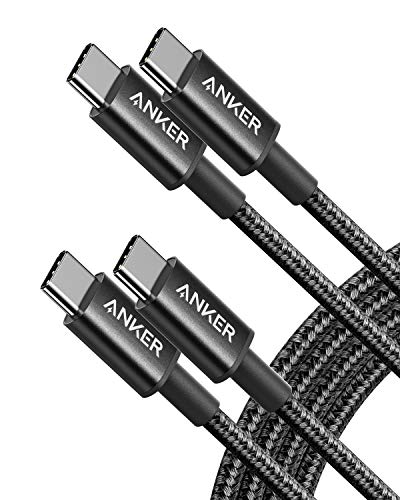
As an ever-evolving debate, the discourse surrounding USB-C and
Lightning: An Apple’s Offspring
Understanding Lightning: Apple’s Proprietary Connector
Exigencies of the technological landscape have prompted many brands to engineer products specific to their platform.
Among such inventions is Apple’s Lightning connector.
With an all-digital, eight-signal design, it definitively outpaces previous iterations of connectors that were utilized in Apple devices like iPhones, iPads, or iPods.
The Lightning connector, dubbed so due to its high-speed capacity that reels in significant efficacy, was introduced back in 2012, replacing Apple’s erstwhile 30-pin dock connector.
Unlike its predecessor, the Lightning connector is reversible, thus eliminating the inconvenience of fumbling with your cable to connect it in the right orientation.
Advantages of the Lightning Connector
This innovation by Apple offers several perks that enhance user experience.
Of course, speed rides the vanguard.
The Lightning connector can back faster data transfer and charge delivery than previous connectors.
This means you can sync up your device or power it up in less time than before, enhancing efficiency and convenience.
Another advantage is its compact design, which is significantly smaller than the older 30-pin connector.
This freed up some valuable space inside devices for other components, thereby empowering Apple to create more sleek and compact designs.
Moreover, the Lightning connector is adaptable.
Apple has made it a unified port for all their devices, thereby lowering the need for multiple different cables.
With adapters, it can also handle connections to HDMI or VGA outputs, making it versatile for different usage scenarios.
A further aspect is its durability.
Thanks to the absence of moving parts, wear and tear is notably reduced compared to older generation cables.
This is a significant boon for those who frequently plug in and out their devices, promising a longer lifespan for their cables.
The Future of Lightning
Undeniably, the Lightning connector paved the way for several technological advancements.
However, with the advent of Universal-C (USB-C), many speculate that it might soon be paling into insignificance.
USB-C, with its promises of universality and superfast connections, seems poised to usher in the new age of connectivity, prompting murmurs about the possible demise of the Lightning era.
Yet, for the foreseeable future, the Lightning connector looks set to stay, particularly in the realms of iPhones and iPads.
Regardless, the rise of other technology doesn’t negate the fact that the Lightning connector had its moment of brilliance in the tech world, changing the digital landscape for better.
The Genesis of Lightning
Launched alongside iPhone 5 in 2012, Lightning cables were Apple’s response to the growing need for faster data transfer and charging speeds.
Unlike its predecessor – the 30-pin connector – the Lightning was smaller, reversible, and could fit into the increasingly slim Apple devices.
One key feature is Apple’s complete control over the Lightning standard, making the company the sole arbitrator of design alterations and enhancements.
Evolution from the 30-pin Connector

Apple has always been known for its cutting-edge design and premium aesthetics, and the transition from the 30-pin connector to the Lightning cable in 2012 was a nod to these facets.
The 30-pin connector, an older charging method for Apple devices, was large and bulky compared to today’s designs, promptings calls for a sleeker, more modern connector.
The Lightning cable was introduced alongside the iPhone 5, revolutionizing the way Apple devices could be charged and data transferred.
No longer was it necessary to worry about the orientation of the cable when connecting it to your device – the Lightning connection was thoughtfully designed to be reversible.
The Impact on Device Design
The introduction of Lightning cables also had a significant impact on the design of Apple devices.
The smaller, more streamlined connection opened up possibilities for even slimmer devices, paving the way for subsequent iPhone models and even influencing the design of other Apple devices such as iPads and iPods.
By eliminating the large 30-pin connector, Apple was able to reclaim precious real estate within their devices which was utilized to enhance battery capacity or incorporate additional features and functionalities.
Apple’s Control and Innovation
One unique aspect of the Lightning cable is the level of control Apple is able to exert over its design and distribution.
Even subtle changes to the design of the Lightning cable are directly controlled by Apple, allowing the technology giant to optimize its products for the Lightning connection and enabling more rapid and efficient data transfers.
However, this level of control also provides Apple with a monopoly over Lightning cables, allowing the company to set prices and determine compatibility with other devices and accessories.
Therefore, while consumers reap the benefits of faster data transfer and charging speeds, they are also locked into purchasing products or accessories that are Lightning-compatible, which typically come at a premium due to the Apple branding.
The Lightning standard keeps Apple firmly in control of an integral aspect of their ecosystem – ensuring not just consistent quality and performance across products and accessories, but also a steady revenue stream flowing from the sale of Lightning compatible accessories.
The Pace of Lightning
Despite being more compact and sophisticated in design, real-world charging tests suggest that a Lightning cable doesn’t quite live up to its name.
While it can deliver a power output of 12 watts for charging iPhones, the process isn’t exactly lightning-fast.
Most Lightning cables enable an iPhone to charge approximately between 3 – 4.5 hours from 0 to 100%.
Understanding Lightning Cable Performance
Lightning cables were introduced to the tech world with much fanfare.
Hailed as Apple Inc.’s proprietary connector for its iPhones, iPods, and iPads, they were expected to herald a new era of high-speed charging.
However, while they serve as an effective and compact solution, their performance can sometimes prove underwhelming.
For example, a real-world charging test reveals that while a Lightning cable can deliver a power output of 12 watts, this delivery is not as rapid as one might expect with a name as flashy as “Lightning”.
This is particularly evident when it comes to charging iPhones.
The advertised rapid charging often doesn’t coincide with the actual charging experience, with average charge times hovering between 3 to 4.5 hours for the devices to go from zero to full charge.
This is hardly the ‘flash’ that one might expect.
Comparing with Other Charging Cables and Technologies
To put these numbers into perspective, it’s crucial to draw comparisons with other charging technologies.
For instance, USB-C or micro-USB cables, common charging mediums for Android devices, often outperform Lightning cables.
They not only deliver higher power outputs but also facilitate faster charging times.
While USB-C powers up with a whopping 18W and completes charging in approximately 1.5 to 2.5 hours, micro-USB, capable of delivering a power output of 15W, can fully charge a device in around 2 to 3 hours.
The Evolving Charging Landscape
However, it’s important to remember that the tech world is never static.
With the rise of wireless charging and other revolutionary charging technologies, the game is always changing.
For instance, the latest Magsafe Charger from Apple uses both a magnet and inductive charging to deliver up to 15W to your iPhone 12 or 12 Pro.
Nevertheless, the continued use and popularity of the Lightning cable demonstrate its durable design and reliable functionality, despite its comparatively slower pace.
In conclusion, while the Lightning cable might not deliver the lightning-fast charge its name might suggest, it does offer a reliable means to power iPhones and other apple devices.
Moreover, continuous technological upgrades and innovations signify a progressive trajectory that will hopefully address the pace issue in the near future.
The Rise of USB-C
A New USB Standard: USB-C
USB-C, technologically known as USB Type-C, is a type of USB (Universal Serial Bus) connector that was developed and is being championed by the USB Implementers’ Forum, a group of tech companies including giants like Apple, Dell, HP, Intel, and Microsoft.
This new hardware interface has quickly risen to prominence and is now considered the sought-after standard in the digital world.
With this new technology, gone are the days of fumbling to plug your USB device into your computer or any peripheral device.
Multiple Capabilities and Versatility
One of the many reasons for the rise of USB-C lies in its true versatility and broad capabilities.
A single USB-C port can be used for multiple purposes.
It can transmit data at a high speed, support video for computer monitors and televisions, deliver power to charge laptops, smartphones, and many other devices.
This versatility drastically reduces the number of cables and adds simplicity to a user’s desk or work environment, making it a popular choice among many users.
For example, Apple’s latest MacBook models feature a single USB-C port used for both power charging and peripheral connectivity.
This design not only adds elegance to the product but also eliminates the need for a separate power cable and numerous other cables.
This is merely one among many examples showcasing the versatility of the USB-C ports.
High-Speed Data Transfer
Another significant reason for the popularity of USB-C is its capability to enable high-speed data transfer.
With USB-C, data can be transferred at up to 10 Gbps (Gigabits per second) under the USB 3.1 standard, and it can make transfer rates up to 20 Gbps possible under the USB 3.2 standard.
This exponential increase in speed compared to the past iterations of USB types makes it particularly appealing for users who regularly need to transfer large amounts of data.
User-Friendly Design

A further contributing factor to the rise of USB-C has been the user-friendly design of the connector itself.
Unlike its predecessors such as Type-A and Type-B USBs, the USB-C has a symmetrical and reversible design.
This means users no longer need to worry about which way is ‘up’ or ‘down’ when inserting the plug into the port, eliminating one of the longstanding frustrations with USB usage.
Future Directions
While USB-C is relatively new, it is clear that its adoption is becoming widespread due to its impressive multitude of capabilities and
Advent of USB-C
The USB-C or USB Type-C saw its inception in 2014 and emerged as the universal standard for charging devices and data transfer.
The capabilities of the USB-C are vast – from powering laptops to transferring huge data files, and of course, charging smartphones.
The fact that it’s two-sided, like the Lightning connector, resolved the eternal struggle of trying to fit your charger in the right way.
Comprehensive Features of USB-C
The revolutionary power and data capabilities of USB-C has earned it a substantial role in the tech industry.

While previous USB Type-A and Type-B had separate designs for power or data transfer, USB-C cleverly integrates both these purposes effortlessly.
This makes it a go-to standard for all types of devices irrespective of their function, whether they are audio equipment, drones, medical instruments or gaming consoles.
Simplifying User Experience With Two-Sided Design
One distinctive advantage of USB-C that it shares with the Apple’s Lightning connector is its two-sided or reversible design.
Often, people would struggle with determining the right way to plug in older USB connectors, a problem that has been humorously dubbed as the ‘USB Superposition problem’.
However, the symmetrical and user-friendly design of the USB-C defies this problem, saving users from the hassle of fumbling around with their cables.
Impressing With High-Speed Data Transfer
The USB-C not only wins in versatility and convenience, but it also often offers increased speed when compared to older USB types like USB 2.0 and even 3.0.
With the capability of transferring data at a rate of up to 20 gigabits per second, it has provided a significant boost to file transfers, video streaming, and even augmented and virtual reality (AR/VR) applications.
This makes it optimal for transferring huge data files between devices such as external hard drives and computers.
Powering The Future Of Tech: Devices Utilising USB-C
Beyond being an everyday charging solution for smartphones, its widespread adoption can be witnessed in various devices.
Google’s Pixel phones, Apple’s MacBook Pros, and Nintendo Switch prominently employ USB-C ports.
Even modern laptops now forego the traditional barrel-style power connectors in favor of compact and handy USB-C based charging.
This momentum for USB-C showcases its universal adoption and represents a future where a single cable type can be the solution for all gadgets and their diverse requirements.
Embracing A Universal Standard
Given the versatility and advantages of USB-C, it’s not surprising that it has quickly become the go-to connector for new devices.
It symbolizes the first truly universal connector, leading tech giants to adopt it widely and set it as a new standard for the foreseeable future.
This shift not only simplifies our digital lives but also paves the way for developers to innovate new devices without being bound by varied data and power interfaces.
Turbo Charging with USB-C
USB-C truly shines in the charging speed competition.
When using a USB-C PD (Power Delivery), it can support charging speeds up to an impressive 100 watts, eclipsing the Lightning cable.
Day-to-day users experience that a USB-C to Lightning cable can charge an iPhone up to 50% in about 30 minutes, and a full charge will take roughly 1.5 – 2 hours.
Understanding USB-C Charging Capabilities
USB-C, oftentimes labeled the ‘universal’ charging cable, has an enormous propensity for providing efficient charging experiences.
When it comes to charging speeds, this technology is in a league of its own.
This is in large part due to the use of USB-C PD (Power Delivery).
The power delivery is a specification for handling higher power and allows a range of devices to charge quickly over a USB connection.
Recommended to our readers: Click here
It operates by facilitating a mutual agreement between devices to draw power in the most capable way.
Lightning versus USB-C Charging
When compared to Apple’s Lightning cable, which boasts a power output of 12 watts, the raw power provided by USB-C is undeniable.
USB-C cables harness the power of USB-C PD, which supports charging speeds of up to an extraordinary 100 watts.
That’s nearly eight times the power of a Lightning cable.
This sheer magnitude of power enables devices to charge at unprecedented rates, yielding more efficiency and convenience to the end-user.
Real Time Charging Scenarios
To bring these details to life, let’s discuss a practical scenario.
An iPhone user will find that employing a USB-C to Lightning cable for their charging needs significantly diminishes wait times for device charging.
Tests have shown that an iPhone, when charged with this set-up, can reach up to 50% charge within about 30 minutes.
Considering that traditional charging methods can take much longer to achieve the same result, the advantages of USB-C become rapidly evident.
Furthermore, achieving a full charge using this method will only take around 1.5 to 2 hours.
This is a significant time savings in comparison to other charging methods, further highlighting the potency of USB-C charging.
Implications for User Efficiency
USB-C charging provides users a valuable solution for maintaining device readiness in a society that is heavily reliant on technology connectivity.
The productivity gains from reduced charging times can be substantial in various contexts, be it personal use, professional settings, or travel.
The technological advancement in USB-C presents a future where waiting for a device to charge may no longer be a significant disruption to user productivity.
In conclusion, USB-C’s high-speed charging capability, particularly when used with PD, leads the pack in the charging speed competition, providing unparalleled efficiency and convenience for users.
Recommended to our readers: Click here
Users equipped with USB-C charging cables can look forward to more productive and uninterrupted digital experiences.
Pros and Cons
It’s a tug of war when comparing the two, each having their own strengths and weaknesses.
Understanding the Tug of War Perspective
The metaphor of a tug of war presents an accurate visual of comparing any two concepts, principles, products or ideologies.
This visual analogy encapsulates the concept of pulling at either side of an issue, signifying the constant struggle between two contrasting points of view.
Each side, employing different tactics or strategies, competes to tip the balance in its favor.
In this context, it’s important to understand that the two opposing forces or elements have their unique strong points and vulnerabilities.
Delving into Strengths
Strengths are the inherent qualities or characteristics that give one side an advantage over the other.
These attributes are what make an option appealing or beneficial for someone.
Depending on what’s being compared, these strengths could mean superior features of a product, beneficial policies of a political party, or more compelling arguments in a debate.
For instance, in comparing two smartphone brands, one might offer better camera quality while the other might have longer battery life.
Both features are strengths, yet the priority of these can differ significantly based on the customer’s requirement.
Acknowledging Weaknesses
Contrasting the strengths, we encounter weaknesses.
These are the characteristics that put one side at a disadvantage.
They are the Achilles’ heel of products, arguments, or ideologies.
They may take the form of shortcomings or areas that need improvement.
In our smartphone example, a weak battery life could be a major drawback for a phone with an excellent camera.
Recommended to our readers: Click here
Conversely, a phone with splendid battery life may have a less than satisfactory user interface.
Both constitute weaknesses, and they play a vital role in determining the overall appeal and efficacy of the options.
Striking the Balance
The process of comparing and weighing the respective strengths and weaknesses of two sides is a challenging task.
Yet, it is extremely crucial as it determines our choices, preferences, and endorsements.
It’s not always about choosing the one with the most strengths or least weaknesses but coming to a decision that factors in what matters most to the individual or collective group.
Understanding the pull of this metaphorical tug of war helps us understand the intricacies involved in decision making, highlighting not just the clear cut pros and cons, but also illuminating the gray areas that often go unconsidered.
This in-depth exploration of pros and cons, the strengths and weaknesses, can provide a nuanced understanding of the real value or merit of what’s being compared.
The tug of war continues, but with more informed participants.
Lightning Cable – Strengths and Weaknesses
The Lightning cable’s primary advantage lies in its proprietary design, with Apple having sheer control over its quality.
The connector’s slim design suits the sleek aesthetics of Apple devices.
However, charging speed isn’t Lightning’s forte, making it less competitive in the fast-charging arena.
Extensive Quality Control
Apple, being one of the tech industry pioneers, proactively addresses user concerns about product quality.
As a matter of fact, the primary advantage of Lightning cables is their proprietary design.
Since these cables are specifically manufactured by Apple, the company’s quality assurance is in full swing.
Apple uses precise and methodical manufacturing processes to ensure that every Lightning cable meets the required quality standards before it reaches the consumer.
This control helps to minimize malfunctions and keep the quality consistent among all Lightning cables.
Sleek Design
Apple is well-known for creating eye-catching, minimalistic designs for their products, further establishing the brand’s premium identity in the market.
In line with this, the Lightning cable is no exception.
Its slim design does not only serve functional purposes, but it also complements the sleek aesthetics of Apple devices.
The fine combination of practicality and style makes these cables highly favored by Apple users.
They blend seamlessly with the premium look and feel of the devices, ensuring that design harmony is not disrupted even when the device is being charged.
Room for Improvement: Charging Speed
While the Lightning cable surely has its strengths, it is not without weaknesses.
One notable disadvantage is the charging speed.
In our fast-paced lifestyle, speed is everything.
As the demand for quick charging solutions has surged in recent times, the Lightning cable hasn’t quite kept up with the pace, making it less competitive in the fast-charging arena.
As USB-C and other fast charging standards continue to evolve and offer quicker charging times, many users might consider Apple’s Lightning cable somewhat outdated in this regard.
However, it’s worth noting that while Apple’s Lightning cable might not offer the fastest charging speed in the tech market, it serves its purpose for consistent reliable charging.
Moreover, Apple’s control over both hardware and software enables them to ensure that the charging process is well-managed, reducing potential battery life issues over time.
Even if the Lightning cable lacks slightly in terms of speed, it makes up for it with these other aspects.
The Future of Lightning Cable
Today, as Apple transitions towards a more universal interface – USB-C – in its newer devices like MacBooks and iPad Pro, there’s plenty of speculation around the future of the Lightning cable.
While we wait to see whether it will remain or be phased out, one cannot deny the crucial role that it plays — both functionally and aesthetically — in the Apple ecosystem.
In conclusion, the Lightning cable serves as
USB-C – Strengths and Weaknesses
USB-C’s primary strength is speed.
Imagine forgetting to charge your phone overnight but being able to power it up while you get ready for work.
That’s the advantage that USB-C brings to the table, speed like no other.
They are also universal and can charge a wider range of devices.
However, the downside lies in the lack of proprietary control, leading to potential quality inconsistencies among different brands.
Remarkable Speed of USB-C
Perhaps the most notable strength of USB-C is its superb speed, which stands out among all types of connectors.
Unlike traditional USB cables that could only charge your device at a sluggish pace, USB-C cables are designed with the capability of quick charging.
The high-speed power delivery system is such that you can return your phone to life in a fraction of the time it would take with other chargers.
This means, a quick charge while you brush your teeth or dress up for work might be enough to power your phone for the day.
USB-C’s speed advantage is not just limited to charging, it also affects data transfer.
This is particularly beneficial for professionals who regularly need to transfer large files quickly.
Whether you’re a videographer transferring raw footage, a photographer transferring high-resolution photos or a musician transferring audio files, USB-C can handle it expediently due to a data transfer speed that reaches up to 10 Gbps—an impressive feature that can enhance productivity.
Enhanced Universality and Versatility
Another salient feature of USB-C is its universality.
Traditional USB cables are often limited in their application.
USB-C, however, breaks this limiting tradition.
A USB-C cable can charge a wide array of devices including laptops, gaming consoles, digital cameras, and smartphones regardless of brand or operating system.
The same cable can be used to charge your MacBook Pro, Samsung Galaxy smartphone, Nintendo Switch, or GoPro camera, making it a widely versatile option.
This element of universal applicability increases convenience for users.
It reduces the need to carry around multiple cables for different devices, saving you from the hustle and frustration of keeping track of and detangling numerous cables.
Risks With Quality Inconsistency
However, it’s not all rosy with USB-C. One potential pitfall lies in the lack of proprietary control.
Manufacturers of devices and hardware often design chargers to specifically match the power requirements and safety standards of their products.
Since USB-C is universal and not tied to a specific brand, the build quality and performance standard can greatly vary depending on the brand of the USB-C cable.
This absence of standardization can lead to inconsistencies in charging speed, efficiency, and safety.

In some instances, low-quality cables may charge your device more slowly than expected or worse, cause damaged to the device due to improper power delivery.
Therefore, it is important for consumers to ensure that they are purchasing from reputable brands and retailers.
In conclusion,
Considerations: Make Your Choice
When it all boils down to determining which cable charges faster, USB-C steals the limelight by a significant margin.
However, other factors also come into play such as device compatibility, quality of cables, and the power output of the charging brick used.
Break Down of Charging Speed
Speed is a vital factor to consider whenever you’re choosing a cable.
USB-C seems to take a clear lead in this competition based on charging speed measures, a fact that is largely owed to its ability to handle high levels of power.
To put it in context, while the older USB versions like USB 2.0 and 3.0 deliver power at 2.5W and 4.5W respectively, USB-C can deliver power at an astonishing rate of up to 100W.
This considerable power handling capacity allows devices to charge significantly faster when using a USB-C cable.
Influence of Device Compatibility
When it comes to device compatibility, it’s important to mention that not all devices are created to handle the power levels that USB-C provides.
Some devices, especially older models, are designed to work with previous versions of USB cables, hence they may not support USB-C. It’s crucial that you verify your device’s compatibility with USB-C before purchasing a cable.
Quality of Cables: An Essential Comparator
The quality of the cables you use also matters.
It’s not uncommon to find low-quality cables that resemble USB-C on the market.
Although these may work in the short term, they often cannot meet the expectations of longer-term performance and can even cause harm to your devices.
High-quality cables, on the other hand, are built to meet standards of resistance, insulation, and power delivery, ensuring that your devices charge smoothly and efficiently.
The Role of the Charging Brick
Recommended to our readers: Click here
The power output of the charging brick that you use can also greatly influence charging speeds.
If you are using a USB-C cable but your charging brick’s power output doesn’t match the power draw of your device, it can result in slower charging times.
In contrast, a power brick that is capable of outputting a higher level of power can enable you to take full advantage of USB-C’s fast charging capabilities.
Utility Over Preferred Speed
Despite USB-C’s clear advantage in terms of charging speed, it cannot be deemed a universal solution because of these other factors.
In some cases, older versions of USB cables may serve you better if they are of high quality, compatible with your device, and if an appropriate power brick is used.
Hence, the decision to choose a charging cable boils down to the thorough consideration of all these elements, not just the outright speed factor.
Conclusion: The Verdict
Zooming in for a closer look at the charging speeds, USB-C undeniably holds an advantage over its Lightning counterpart.
However, your decision should also hinge on the devices you own and your individual needs.
| Lightning | USB-C | |
|---|---|---|
| Speed | Charges slowly (3 – 4 hours) | Fast charging (1.5 – 2 hours) |
| Device Compatibility | Apple devices only | Universal usage (wide range of devices including Apple) |
| Key Features | Proprietary, slim design, controlled quality | Universal, supports upto 100W charging, variable quality |
| Review Summary | Well-suited for Apple devices, not best for quick charging | Best for fast charging and versatile use, quality might vary |
In conclusion, while Apple’s Lightning cable beautifully aligns with the brand’s ethos of exclusive design and quality control, it does lag behind in the race with USB-C in terms of charging speed.
Are you an Apple enthusiast who values aesthetics and quality or a speed demon who values faster charging time and universal compatibility?
The choice is yours!
Verdict Breakdown: Speed
When comparing the Lightning cable to the USB-C, it is hard to deny that USB-C offers a faster charging speed.
The average charging time for a device using Lightning is 3 to 4 hours.
On the other hand, a USB-C can charge the same device in just 1.5 to 2 hours.
For consumers in need of a rapid recharge – such as professionals who are always on the move, or passionate gamers who can’t afford long recharging breaks – USB-C offers a clear advantage.
Verdict Breakdown: Device Compatibility
In terms of compatibility, the Lightning charger connects solely with Apple devices.
This means that it is well-complemented to Apple’s product ecosystem.
Recommended to our readers: Click here
Users who possess mostly Apple devices might find the Lightning charger simpler and easier to use.
Conversely, USB-C is recognized for its universal application.
It can be used with a wide range of devices, including but not limited to Apple products.
Those with an array of diverse devices will surely appreciate the versatility that USB-C brings to the table.
Verdict Breakdown: Key Features
Lightning chargers boast Apple’s proprietary technology, which results in a slim design and consistently high-quality performance.
Customers who prioritize quality control and consistency in their product’s performance could highly benefit from the Lightning charger.
On the other hand, USB-C supports a massive 100W charging capacity, enabling it to power larger devices like laptops, in addition to smaller gadgets.
Recommended to our readers: Click here
However, due to its universal nature and widespread use, the quality of USB-C cables can vary.
Verdict Breakdown: Review Summary
In summation, the Lightning charger plays a critical role amongst Apple’s portfolio of products, serving as a beneficial choice for Apple loyalists who have committed to the brand’s ecosystem.
The slower charging speed may be a hindrance for those needing quick power boosts.
Conversely, USB-C earns points for its speed and device flexibility.
This makes it a robust contender especially amongst users who possess an array of different devices, but its quality can be inconsistent.
In the end, your cable of choice will depend upon the specific requirements and circumstances of your tech lifestyle.
Whether you prioritize speed, flexibility, device loyalty, or quality consistency, both Lightning and USB-C offer their own unique benefits.