Introduction: Two Titans Clash
In our increasingly digital world, choosing the right laptop is more than a casual purchase – it’s a critical decision affecting our productivity and daily life.
Recommended to our readers: Click here
Today, we analyze two of the tech world’s forerunners, the Chromebook and the MacBook Air, in their battle for student supremacy.
We’ll dissect different areas of consideration, from cost and ease of use to software compatibility and device durability.
Understanding the Digital Age
The digital age has fundamentally transformed how we work, learn, and communicate.
This shift is perhaps most apparent in the realm of advanced technology, specifically the skyrocketing usage of laptops.
They have become an indispensable component for work, education, and even leisure around the globe, elevated from once being considered optional to now an unquestionable necessity.
As such, when it comes to buying a laptop, it’s no longer just a simple shopping trip.
The decision process can be gruelling and detail-oriented, as individuals want to ensure that the model they choose fits both their personal and professional requirements.
The Tech World’s Forerunners: Chromebook and MacBook Air
Diving into the diverse pool of laptops, everyone has heard about the Chromebook and the MacBook Air.
These laptop models are products of two of the most reputable tech giants – Google and Apple.
The devices are incredibly popular, especially among students, due to their lightweight designs and versatile features.
But their entry into the fiercely competitive student market is not without contest.
The fight for dominance between Google’s Chromebook and Apple’s MacBook Air has sparked significant debates, which revolve around their convenience, performance, and value for money.
Dissecting Different Areas of Consideration
These debates lead us to ponder, what makes a laptop ideal for a student’s needs?
Is it the initial cost that appeals most to those in education, or is it the software compatibility which caters to specific course requirements?
Perhaps it’s an easy-to-use interface that allows anyone, regardless of their digital literacy, to navigate complex functionalities.
Or maybe, it’s device durability that enables the laptop to remain intact among the hustle of school life.
Evaluating various parameters like cost, ease of use, software compatibility, and device durability can help in marking a clear boundary between Chromebook and MacBook Air.
In subsequent sections, we will dive deeper into comparing these factors for both laptops.
However, it’s essential to keep in mind each student’s unique needs and objectives.
And that, ultimately, the best laptop is the one that best caters to these individual requirements.
It truly is an exciting time to witness two titans clashing, seeking to offer the best possible laptop for students in our ever-growing digital world.
MacBook Air: Apple’s Lightweight Performer
The MacBook Air, much like other Apple products, offers a sleek design, reliable performance, and a highly intuitive interface.
From its crisp Retina Display to the seamless integration with iOS devices, the MacBook is a formidable choice for students of all levels.
MacBook Air’s Sleek Design and Build Quality
The MacBook Air showcases Apple’s commitment to aesthetic finesse and ergonomic excellence.
Its slender aluminum chassis not only gives it a visually striking and modern appearance but also makes it incredibly lightweight and effortlessly portable.
So, whether you’re heading to school, work, or the local cafe, it can easily fit into any bag or backpack.
A hallmark of Apple’s design ethos, the MacBook Air’s premium materials assure resistance to wear and tear, providing a long-lasting quality that can endure the rigorous demands of daily use.
Uncompromised Performance
When it comes to sheer performance, the MacBook Air stands its ground quite impressively.
Powered by Apple’s state-of-the-art M1 chip, it guarantees a fast, smooth, and energy-efficient computing experience.
Editing videos, compiling code, opening multiple browser tabs – the MacBook Air handles an array of demanding tasks with little to no slowdown, making it a coveted asset for students from different fields.
From a simpler tool like Pages for crafting essays to more complex software like XCode for coding pursuits, the MacBook Air’s efficiency ensures that it can handle a diverse suite of applications without any hiccup.
Furthermore, with an impressive battery life that lasts up to 18 hours on a single charge, it keeps students productive throughout the day without the worry of frequently searching for a power outlet.
Intuitive User Interface
Apple’s macOS Big Sur powers the MacBook Air, delivering an interface that represents a fine balance of simplicity and sophistication.
Unlike most other laptop interfaces, macOS is known for its uncluttered layout, intuitive design, easy-to-use control panel, and efficient app management.
This makes it highly user-friendly even for students who may not be tech-savvy.
Seamless iOS Integration
Apple’s ecosystem ensures a seamless integration of MacBook Air with other iOS devices like iPhones and iPads.
Important tasks such as file transfers, taking calls, sending texts, copying and pasting across devices, or even unlocking your MacBook with your Apple Watch are handled effortlessly.
Moreover, with the Continuity Camera feature, your iPhone or iPad can be used as a scanner or camera for your MacBook.
This level of cross-compatibility and convenience can enhance productivity for students, providing a unified experience across their Apple devices.
In conclusion, the MacBook Air excels in design, performance, user experience, and compatibility, thereby coming through as a sterling choice for students at every level.
Its synergy with other Apple devices only fur
Design and Display
The MacBook Air is undeniably a looker.
Crafted with 100% recycled aluminum, its thin, light, and eco-friendly exterior offers a premium feel.
Matched with a dazzling 13.3″ Retina Display with higher resolution, text and graphics are sharper, perfect for long hours of study or multimedia use.
However, luxury comes with a price tag that might be too steep for some student budgets.
Unrivaled Aesthetics and Sustainability
The MacBook Air, as mentioned, is more than just a pretty gadget.
Its sleek overall look has made it a favorite among professionals, students, and creatives alike.
The device’s casing is made entirely out of recycled aluminum, proving Apple’s commitment to sustainability without compromising aesthetics.
Recommended to our readers: Click here
The effect is an impressive balance of being simultaneously modern and eco-friendly, proving that technology and environmental consciousness can harmoniously coexist in a single product.
Ultra-Thin and Ultra-Light Convenience
The MacBook Air’s thin and light design is also a noteworthy feature that adds to its overall aesthetic appeal.
Its 1.29 cm thickness and its weight of just 1.29 kilograms makes it incredibly easy to carry around, whether you’re moving from lecture hall to library, or darting between meetings in the city.
This remarkably compact design not only adds to the laptop’s aesthetics but effectively enhances its mobility and practicality for on-the-go users.
Retina Display for Exceptional Visuals
The Retina Display incorporated in the MacBook Air is undoubtedly a game-changer for various users.
The 13.3″ LED-backlit display not only produces higher resolution graphics and text but with its four million pixels, it presents incredible detail and realism.
This feature is a major plus point for those requiring meticulously sharp visuals like professional video editors, designers, or photographers.
But it’s not just the pros who get to enjoy this feature.
Regular users will experience the benefits too, whether they’re studying, watching Netflix or simply browsing the internet.
Colors are more vibrant, words are crisper, and images are more lifelike, resulting in an enhanced overall viewing experience.
A Potentially Prohibitive Price
While the MacBook Air offers outstanding features and a luxe exterior, its price might pose a deterrent for some users, particularly students.
Apple products are renowned for their premium price tags, and the MacBook Air is no exception.
Compared to other laptops in the same category, the MacBook Air could indeed impose a financial strain on student budgets.
However, many users argue that the steep price point is justified by the product’s unmatched design, impressive display, and significant durability.
The MacBook Air is seen by many not just as a device, but as an investment.
In conclusion, while the MacBook Air’s higher price tag might deter budget-conscious buyers, its sustainable design, sophisticated aesthetics, portability, and exceptional display features make it a worthy contender among its competition
Performance and Software
When it comes to performance, the MacBook Air doesn’t disappoint.
Recommended to our readers: Click here
The M1 chip powers its operation, providing a quick and responsive user experience.
It can comfortably handle most student tasks, from creating complex presentations to running coding software.
Apple’s macOS is rich in powerful apps, including the iWork suite for productivity tasks.
Nonetheless, the MacBook Air can struggle with high-demand gaming or 3D modelling, limiting those studying gaming or animation design.
M1 Chip and Performance
The M1 chip inside the MacBook Air is Apple’s first in-house developed processor, marking a significant shift in strategy for the tech giant.
More than just a novelty, this chip brings about unparalleled levels of power, particularly when it comes to processing speed and power efficiency.
With the M1 chip at the heart of operations, users can enjoy a seamless, lag-free experience whether they are scrolling through web pages, transferring large files, or running multiple applications at once.
For the average student, the MacBook Air’s performance advantages translate into a capable workstation.
It can power through heavy tasks like video editing, data analysis, and graphic design effortlessly, shaving off valuable minutes from task completion times.
Even more intense activities, such as writing and compiling code, run fluidly on this laptop, a testament to the power of the M1 chip.
Mac OS and Productive Tasks
One of MacBook Air’s other significant advantages is its operating system, macOS.
A robust system, macOS Big Sur, offers users an intuitive and efficient user interface.
The “iWork” suite that comes pre-installed on the MacBook, for example, offers Apple’s answer to Microsoft Office with applications such as Pages, Numbers, and Keynote.
Recommended to our readers: Click here
Each application is tailored perfectly for macOS to provide a seamless user experience while ensuring you have all the tools you need for productive tasks like document editing, spreadsheet manipulation, and presentation creation.
Gaming and 3D Modeling Limitations
Although the MacBook Air offers an impressive performance level for the average student or professional user, it is not without its limitations.
High-demand activities, such as gaming and 3D modelling, tend to stretch the MacBook Air to its limit.
The dearth of high-performance games available for macOS already limits choices for gaming enthusiasts.
With 3D modeling, the laptop’s integrated GPU can struggle to render complex scenes, particularly those with high-resolution textures or advanced lighting effects.
For those studying game development or animation design, this could present a significant challenge.
It suggests that while the MacBook Air is an excellent device for most, those who require heavy-duty graphics power may need to look elsewhere.
Conclusion
In conclusion, the MacBook Air is an undeniably powerful notebook for a wide variety of tasks, backed by Apple’s impressive M1 chip.
It provides an excellent user experience due to its fast, responsive operations coupled with the robust, user-friendly macOS.
However, dedicated gamers and 3D modeling students might
Chromebook: Versatility on a Budget
The Chromebook, Google’s answer to affordable computing, presents a compelling option for cash-strapped students.
Its merits lie in its simplicity: The laptop operates on Chrome OS, a lightweight system that focuses on Google Suite’s power—Docs, Sheets, and Slides—and web-based applications.
The Power of Chrome OS: A Detailed Look
The beauty of a Chromebook lies in the underlying operating system: Chrome OS.
As an operating system developed by Google, Chrome OS is simple yet feature-packed, designed to provide the essential computing features without the need for expensive hardware requirements.
It’s the perfect marriage of value and functionality, providing a computing experience that’s both streamlined and cost-effective, particularly for students or aspiring professionals on a tight budget.
Chrome OS constantly updates itself, meaning it reduces the manual effort of maintaining system patches.
On top of that, the system is designed with speed in mind — you can boot your Chromebook in seconds, thereby saving precious time for students and professionals alike.
Harnessing the Power of Google Suite
Central to the Chromebook experience is the integration of Google Suite applications.
These include familiar tools such as Google Docs, Sheets, and Slides—tools that many students and professionals use daily.
The seamlessness with which these applications are integrated into Chrome OS ensures users can work efficiently, potentially enhancing their productivity.
Google Docs, for instance, allows users to create and edit text documents online while collaborating with others in real time.
Google Sheets, on the other hand, serves to provide a powerful platform for managing and analyzing data through spreadsheets, while Google Slides makes it easy to create engaging presentations.
These tools are completely web-based, which means no additional software installations are necessary.

On top of that, your work gets automatically saved in Google Drive, offering users relief from worrying about data loss and making sharing and collaborating considerably easier.
Cost-Efficiency with Web-Based Applications
In addition to the Google Suite, Chromebooks also provide users with the opportunity to use an array of web-based applications.
This is a significant advantage for those who may not have the financial resources for expensive software packages.
Many web-based applications offer similar functionalities as their premium, desk-bound counterparts.
From image editing tools to note-taking applications, there’s a vast range of abilities that a Chromebook is capable of.
Many of these web-apps are free or at least offer a free tier, which further accentuates the cost-saving attributes of the Chromebook.
Conclusion
In conclusion, the Chromebook is a versatile, affordable option for various users, particularly students or professionals working on a budget.
With its lightweight system, integration of powerful web-based applications, and the powerful Google Suite, a Chromebook isn’t just an affordable computing machine—it’s a practical tool to
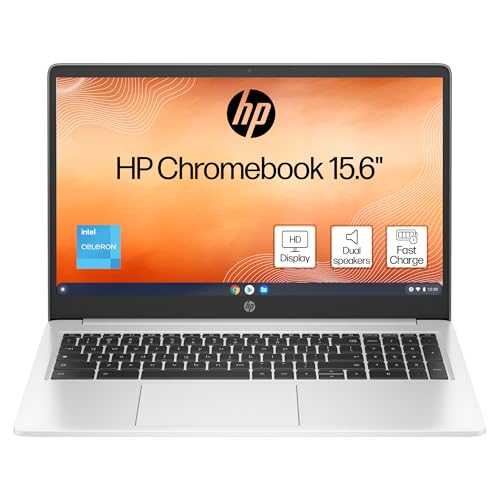
Design and Display
While not as luxurious as the MacBook Air, modern Chromebooks feature a solid build, lightweight portability, and a humble charm.
The screen often compromises for its budget pricing, and although not as vibrant as Retina Display, it’s sufficient for day-to-day student tasks involving document editing and web browsing.
Chromebook Design Aesthetics
Chromebooks may not embody the luxury or glossy aesthetics of a MacBook Air, but they have made a name for themselves in their distinct design category.
Geared towards functionality and practicality, Chromebooks are crafted with user convenience in mind.
The materials used in its build are chosen for durability and reliability, providing a solid framework often seen in much higher-priced laptops.
Chromebooks, marketed as a more affordable option to other brands, place a lot of emphasis on portability.
One of their remarkable features is the lightweight design, stemming from the use of materials like aluminum and firm plastics.
This makes them particularly popular among students and professionals who are always on the move.
This portability doesn’t compromise on the sturdiness or reliability of the device, allowing users to travel and work without worrying about damaging their device.
In contrast to the sleek, metallic allure of a MacBook Air, Chromebooks offer a simplistic, understated elegance which can be seen as their humble charm.
The minimalist design, combined with a smooth finish and compact size, lends a unique appeal that suits minimalist aesthetics and functionality-driven lifestyles.
Display Quality of Chromebooks
Generally, at a glance, the display capabilities of Chromebooks might seem inferior to those of high-end laptops like the MacBook Air.
However, considering their purpose and pricing, the display quality found in Chromebooks is often more than sufficient for regular tasks.
High-resolution display screens might be a common selling point for pricier models, but Chromebooks make use of more economical screen technology.
Yet, it’s important to note that while Chromebooks might not offer a vibrant Retina Display, their screen quality is quite fitting for ‘everyday’ student tasks.
This includes activities like document editing, email browsing, streaming online educational content, and navigating other web-based tasks.
Moreover, the presence of anti-glare screens in many models and adjustable brightness settings can enhance user comfort, especially during extended sessions of use.
They ensure minimal strain on the eyes, further enhancing the user experience.
Overall, the design and display of modern Chromebooks combine practicality with affordability, making these devices an ideal choice for users who value function over high-end features and flashy aesthetics.

Not only are these machines built to last with their sturdy frame, but their displays are purposefully engineered, considering the routine needs of their primary user base.
Performance and Software
Chromebooks are content running multiple tabs and Google suite apps, great for research-heavy tasks.
However, their performance takes a hit when it comes to offline capability.
Without internet, the Chromebook’s functionality greatly diminishes as Google apps primarily rely on cloud saving.
While it may not pose a significant issue on campus with Wi-Fi, it’s a noteworthy limitation for students often on the move.
Multiple Tab Handling and Google Apps Efficiency
Chromebooks show remarkable efficiency when it comes to multi-tasking.
They can handle several running tabs and apps simultaneously without compromising performance or speed.
This is advantageously utilized when you are juggling multiple tasks.
For example, you might be conducting research online while also compiling the information on Google Docs, keeping tabs on your emails, and having your calendar open for checking up on your next meeting.
The Chromebook can seamlessly carry out all these operations, making it the perfect multitasking companion.
Chromebook Limitations: The Internet Reliance
A significant difference between Chromebooks and traditional laptops is the dependency on the internet.
When connected to the internet, Chromebooks become powerful machines that can provide robust support for various computing needs.
But, take away the Wi-fi, and the Chromebook’s value proposition dwindles dramatically.
Google Suite apps, which are the primary software applications on a Chromebook, are cloud-based.
This means they constantly sync with the internet to save all changes made to any document.
So, without the internet, the Chromebook is left with limited functionality.
Sure, it offers basic offline capabilities, allowing amends on documents and spreadsheets, but these changes save only when the device reconnects to the internet.
The on-campus vs on-the-move comparison
The Chromebook could be said to be tailor-made for the campus environment where Wi-Fi is easily and readily accessible.
The conditions on a college campus tend to favor the Chromebook nicely because the constant availability of Wi-Fi ensures that students can rely on Google Suite apps seamlessly.
On the contrary, students who are frequently on the move and working in various locations may face a dilemma.
If these environments do not provide a steady internet connection, the Chromebook’s inherent limitations become all the more noticeable.
Hence, for students whose academic life is not bound by campus walls, the dependability on constant internet connectivity might pose problems in terms of accessing and modifying cloud-saved data.
In conclusion, the Chromebook is a device of extreme situations – it’s either highly efficient or drastically limited.
A prospective buyer should consider their intended use case, especially concerning internet availability, before opting for a Chromebook.
Supervising the Specs: A Quick Glance
| Features | MacBook Air | Chromebook |
|---|---|---|
| Operating System | MacOS | Chrome OS |
| Design | 13.3” Retina Display / Recycled Aluminum Casing | Varies / Plastic or Metal Casing |
| Performance | Powerful M1 Chip / Offline Capability | Geared for Google Suite / Requires Internet |
The Operating Systems: MacOS vs Chrome OS
The operating system (OS) is the backbone of any computer.
The MacBook Air relies on MacOS, a proprietary software developed by Apple.
This OS offers a host of features and integrations with the entire Apple ecosystem such as iPhones, iPads, and Apple Watches.
The MacOS is known for its superb efficiency, strong security, and elegant user interface.
However, MacOS is not very flexible when it comes to running software outside of the approved Apple App Store, which can restrict users who require specialised applications.
On the other hand, the Chromebook operates on Google’s Chrome OS.
It’s a light and fast OS centered around the Google Chrome browser and Google Suite applications (Docs, Sheets, Slides, etc.), integrating them seamlessly within the operating system.
This OS can boot quickly, resist viruses effectively, and is perfect for those who do most of their computing on the web.
However, its major limitation is that it primarily requires an internet connection to function optimally, and can’t run sophisticated software like video editing or graphic design programs.
Getting Into the Design Details
The design is another important factor to consider while comparing the MacBook Air and the Chromebook.
The MacBook Air features a 13.3” Retina Display with over four million pixels ensuring sharp visuals and vibrant colours.
The laptop is enclosed in a sleek casing made of 100% recycled aluminum, resonating with Apple’s commitment towards environmental sustainability.
Comparatively, the design of Chromebooks varies significantly depending on the manufacturer.
Brands like Samsung, Acer, and HP have Chromebook models with different screen sizes, resolutions, and casings.
While some premium models feature high-quality metal casings akin to the MacBook Air, most Chromebooks are wrapped in a plastic casing to keep the price down.
Performance Perspective: Towards Better Productivity
When it comes to performance, the MacBook Air boasts a powerful M1 chip, designed by Apple itself, offering high-speed processing, longer battery life, and the ability to run software offline.
This makes it ideal for professionals who need to run demanding applications or for users who need a reliable laptop in areas with inconsistent internet connection.
On the contrary, Chromebooks are heavily geared towards web-based operations.
These systems come optimized for the Google Suite of applications such as Docs and Sheets.
It means that a majority of your data and applications are stored in the cloud, enabling easy access from any device.
This approach makes Chromebooks a great pick for
Weighing the Pros and Cons
The Art of Decision-Making
The process of decision-making often involves an assessment of various advantages and disadvantages associated with each possible choice.
These are referred to as the pros and cons.
Essentially, the process of highlighting the pros and cons of a situation allows us to explore all aspects fully before arriving at an informed decision.
Pros: The Power of Positive Impact
The ‘pros’ in a decision-making process are characteristically the beneficial aspects of a particular choice or action.
They are the advantages one hopes will materialize as a result of a decision.
For instance, if one is torn between two job offers, the ‘pros’ could include factors such as salary, work culture, career growth opportunities, or job location.
Understanding the potential upsides of each choice provides an essential framework for the decision-making process.
Cons: Acknowledging Potential Impediments
In contrast, the ‘cons’ are typically the disadvantages or potential struggles that may arise if the decision were to be made.
Using the job offer illustration, some ‘cons’ might include a longer commute, fewer benefits, or an increased workload.
It’s crucial to map out these detriments to gain a full understanding of possible outcomes.
The Balancing Act
Weighing the pros and cons is the cornerstone of rational decision-making.
It involves being realistic about the potential results of a decision by critically analyzing the balance between the positive and negative implications of each alternative.
This analysis empowers you to make informed decisions knowing that you’ve fully considered the potential pros and cons.
Practical Implications
This approach is not only useful for big life decisions such as career choices or major purchases but also for everyday choices such as what to cook for dinner or which route to take to work.
For example, choosing to cook a healthy meal has the pro of being nutritious but the con of potentially taking more time.
While opting for the quickest route to work may save time, the con might be more traffic.
The Bigger Picture
In conclusion, it’s necessary to note that while weighing pros and cons provides a structured approach to decision-making, it rarely offers a conclusive ‘right’ or ‘wrong’ answer.
Its primary aim is to provide clarity, promote understanding, and help people make well-thought-out decisions, but it ultimately depends on individual preferences and circumstances.
It’s also important to consider that even seemingly negative choices or hardships could end up bearing unexpected pros.
Hence, it’s always wise
Pros of MacBook Air
The MacBook Air certainly excels in performance, providing a smooth computing experience even for more demanding tasks.
It’s also a winner when it comes to design, offering students a premium, eco-friendly build.
MacBook Air’s Superior Performance
The MacBook Air sets the benchmark in terms of performance for laptops in its range.
It’s equipped with the M1 chip from Apple, which is an ARM-based custom system on a chip.
It packs an 8-core CPU, an 8-core GPU and a 16-core Neural Engine, which makes it remarkably efficient for a variety of tasks.
Whether you’re running heavy applications like Adobe Photoshop, compiling complex programming languages, or simply multitasking with numerous browser tabs, the MacBook Air performs smoothly without any lag or slowdown.
The powerful performance is complemented by an impressive battery life, made possible by the energy-efficient M1 chip.
You can use the device for up to 15 hours of web browsing or up to 18 hours of video playback, making it a preferred choice for professionals who are always on the go.
Exceptional Design and Build
The MacBook Air does not falter when it comes to style and design either.
It sports a beautiful Retina display on a 13.3-inch screen, making colours vibrant and text crisp.

The magic keyboard offers a responsive and comfortable typing experience.
Recommended to our readers: Click here
Furthermore, it comes in a trio of colours including Gold, Silver, and Space Grey, giving users the chance to select a device that matches their personal style.
The MacBook Air also stands out due to its commitment to sustainability.
The device is crafted from 100% recycled aluminium, which not only gives it a durable and premium feel but also significantly reduces its carbon footprint.
MacBook Air: A Student’s Ally
The MacBook Air’s performance capabilities combined with its sleek design make it an attractive device for students.
It is lightweight and portable, making it easy to carry around between classes or to a cafe for study sessions.
Its long battery life can easily see students through day-long lectures and homework sessions in the evening.
And the powerful M1 chip allows running multiple applications simulatenously, facilitating research and academic writing with ease.
It’s also suitable for students studying graphic design, video editing, or other multimedia since the MacBook Air can handle such demanding software seamlessly.
With its robust build, the MacBook Air is durable and can withstand the wear and tear of a bustling student life.
The eco-friendly design of MacBook Air aligns with the increasing environmental consciousness among students who wish to make sustainable choices.
Therefore, with its numerous benefits, the MacBook Air proves to be a prized possession for students.
Cons of MacBook Air
The MacBook Air does have its downfalls, primarily its price.
It can also struggle with high-demand gaming and modeling, limiting some fields of study.
Price Point: An Investment for Many
One of the most commonly cited reasons consumers may find themselves reticent to purchase a MacBook Air is the hefty price tag associated with it.
Consumers need to fork out a significant amount to acquire a MacBook Air, and when compared with PCs with similar specifications, the price difference can become quite stinging.
For example, while a mid-range Windows laptop can cost between $500 to $800, the most basic MacBook Air model starts at $999 as of 2021.
This price point, while justified by the brand’s reputation, swift performance, sleek design, and intuitive operating system, may still pose as a hurdle for many potential users.
Students, freelancers, or small business owners who need a laptop for their day-to-day tasks might find the MacBook Air an unrealistic financial investment.
Performance Limitations for Games and Models
Another major limitation of the MacBook Air is its muscle for handling intense video game graphics or complex 3D models.
Advanced, high-graphic games and professional 3D modeling programs often demand solid graphics performance and a high-speed processor.
MacBook Air’s integrated graphics card — although it performs well within the scope of everyday tasks like streaming video, web browsing, and light photo editing — tends to struggle when it comes to the demanding needs of modern gaming or 3D modeling.
For instance, if one were to play a high-demand game like ‘Witcher III: Wild Hunt’ or ‘Shadow of the Tomb Raider’, the MacBook Air would find it challenging to deliver a smooth experience, even with lowered settings.
Moreover, students who are majoring in certain fields that require sophisticated 3D modeling and simulation software, such as architecture, game development, or mechanical engineering, may find the MacBook Air rather limiting.
Regular usage of resource-heavy software like AutoCAD, SolidWorks, or Blender could potentially stress the MacBook Air’s hardware capabilities.
In a nutshell, while the MacBook Air has much to offer to the average laptop user with its blazing speed, gorgeous design, and ingenious operating system, it might not be the optimal choice for gamers or users heavily dependent on high-end software capabilities.
It’s crucial to weigh the investment against the functionalities needed before making the final purchase decision.
Pros of Chromebook
On the other hand, a Chromebook triumphs in terms of affordability.
It simplifies student life with the seamless integration of Google’s software suite.
Affordability and the Advantage for Budget-Conscious Consumers
One of the significant advantages of a Chromebook is its cost-effectiveness.
It is an exceptional choice for budget-conscious users, particularly students who are looking for a device that offers essential features without the hefty price tag associated with most laptops or tablets.
Chromebooks have a range of models with different price points, but as a rule, they tend to be more affordable.
Whether you need a device for simple online browsing, media consumption, or for handling school projects, Chromebooks can give you a bank-for-your-buck alternative to Windows or macOS devices.
Simplifying Student Life with Google Integration
Beyond affordability, Google’s seamless integration of its software suite further underlines the strengths of Chromebooks – especially for students.
The Google suite includes a number of useful features that can make life significantly easier for the modern learner.
These include tools such as Google Docs for writing and editing, Google Sheets for sophisticated number crunching, Google Slides for presentations, and Google Drive for cloud storage.
All these services are available with a single Google account, offering a level of coherence and simplicity that is hard to find elsewhere.
One brilliant example of this integration is the automatic saving and syncing feature.
When a student is working on an assignment in Google Docs or making a presentation in Google Slides, their work is saved and synchronized across all their devices on the cloud in real-time.
This means they can start working on a task on their Chromebook, continue on a school computer, and finish it at home on any other device.
They never have to worry about losing their work or forgetting to save their progress.
Furthermore, many of these tools support offline mode, meaning students can continue their work even without an internet connection.
Once they are back online, their offline work is synchronized with their Google account.
Harnessing The Power of Economical Versatility
Lastly, the Chromebook isn’t just a simple device for web surfing anymore.
With regular updates from Google, Chromebooks now have access to the Google Play Store, where students can download a variety of educational apps and games.
Whether they need a graphic calculator for advanced mathematics, a language learning app, or a platform to code, the options can be limitless.
This opens up possibilities for personalized learning, supporting various academic needs.
Overall, the Chromebook offers versatility in a compact, affordable package, making it a powerful tool for students aiming to efficiently manage their academic and personal lives.
Cons of Chromebook
But simplicity can be a double-edged sword.
Limited offline capability and a modest display make it less suited to certain fields and lifestyles.
Limited Offline Capabilities
One of the significant disadvantages of using a Chromebook is its limited offline capabilities.
The nature of Chromebook’s operating system, Chrome OS, is primarily intended for Internet use.
This can pose several difficulties for users who often work in areas with a poor internet connection or need to carry out tasks without WiFi access.
Most of the apps and services on a Chromebook such as Google Docs, Google Sheets, and Google Slides, require an internet connection to work fully.
Although there is an offline mode available, its functionality is severely restricted, and it doesn’t offer the same comprehensive experience as when online.
For instance, while you can view documents and spreadsheets offline, you can’t create new ones or edit existing files unless you’ve set them up for offline use while you were online.
Dependence on Google Ecosystem
Chromebooks heavily rely on Google’s ecosystem for their functionality.
This means users must use Google’s suite of apps for most tasks.
While these Google applications are robust and reliable, they may not be sufficient or suitable for everyone’s needs.
For example, someone who prefers Microsoft Office Suite or Adobe Photoshop will be at a disadvantage since those tools aren’t available, or their alternatives on Google’s platform may not provide the same functionality or features.
Modest Display
Whilst Chromebooks are affordable and simple to use, the sacrifice often comes in the form of a modest display.
Most Chromebook models sport basic HD displays and omit features like touchscreen or high-resolution panels that you’ll find on more expensive laptops.
The color accuracy, brightness, and viewing angles can be somewhat lacking, especially in the budget models.
This can be a significant disadvantage for people in creative fields like design, photography, or videography, where precise color representation and sharpness are key.
Chromebook’s Suitability to Certain Lifestyles
Finally, Chromebook’s minimalist design and operation might not suit all lifestyles.
For example, gamers may find the graphics power to be inadequate since hardware-intensive games do not run smoothly on a Chromebook.
Similarly, those involved in data-intensive work, like 3D modelling, programming, or video editing, may find Chromebook’s lack of powerful processing options and limited storage capabilities inadequate for their needs.
Additionally, professionals who work with specialized software suites that are not compatible with the Chrome OS would also face challenges in adopting a Chromebook.
In conclusion, while Chromebooks triumph in simplicity and affordability, they may fall short when catering to specific
Conclusion: A Specialized Take on Universal Student Needs
Embracing each device’s merits means acknowledging each one’s limitations.
For those seeking a seamless workflow, with cost as no barrier, the MacBook Air is the heavyweight champion.
But for students looking for a budget-friendly, simple, and effective solution, especially from a Google Suite-intensive school, the Chromebook carries the day.
Ultimately, identifying your specific needs and aligning them with the right device holds the key to an informed decision in this tech titan clash.

Understanding the Unique Merits and Limitations of Each Device
On a deeper examination, every tool or device comes with its unique features and shortcomings, which could be seen as merits and limitations for different users depending on their unique needs and circumstances.
When it comes to computers, this principle is seen in the comparison between the MacBook Air and the Chromebook.
The MacBook Air, with its high-speed performance, sleek design, and notable durability, offers a seamless execution of more complex processes.
However, its premiership is not unchallenged.
While it sports a distinct advantage with its processing power and premier software compatibility, for students especially, the associated cost can make it a significantly heavy investment.
Not all students may require the high level of performing power it provides, making this much of a cost may not be justified for everyone.
Cost-Effectiveness of the Chromebook
In contrast, the Chromebook, despite its limited power compared to the MacBook Air, proves itself with a simplicity and user-friendliness that make it highly suitable for schools with a heavy reliance on the Google Suite and cloud-based applications.
What it lacks in power, it makes up for in cost-effectiveness and ease of coordination with widely used educational apps.
Recommended to our readers: Click here
If a student is engaging in work that doesn’t demand as much processing power, the Chromebook becomes an inexpensive and pragmatic choice.
Balancing Need and Budget
When deciding between the two, students need to assess their specific requirements.
If using heavy editing software or running complex simulations is a part of their curriculum, a MacBook Air could be necessary.
But if most of their day-to-day activities are centred around browsing the internet, creating documents or presentations in Google Suite, the Chromebook would be an unmatched choice in terms of cost-effectiveness.
The Tech Titan Clash
The “tech titan clash” thus does not have a definitive winner.
The victor in this race depends largely on individual needs, financial situation, and software usage patterns.
Interpreting these factors correctly and striking a balance is what leads to an informed decision.
As the saying goes, the best tool is the one that fits the task at hand – understanding this key principle will guide students in making the best choice based on their unique circumstances.