Exploring the Best: Celestron NexStar Evolution 6 vs Orion SkyScanner 100mm
Recommended to our readers: Click here
In the vast expanse of our universe, the desire to explore the night sky has captivated humanity for centuries.
With advancements in technology, amateur astronomers now have the opportunity to embrace the cosmos through the lens of telescopes that bring distant celestial wonders closer to home.
Two such instruments, the Celestron NexStar Evolution 6 and the Orion SkyScanner 100mm, stand out in the realm of amateur stargazing.
Let’s delve into a comparative analysis of these telescopes to unravel their unique features and capabilities.
Unleashing the Celestial Magic
The Celestron NexStar Evolution 6 is a powerful telescope offering a 6-inch aperture, allowing for impressive views of planets, star clusters, and nebulae.
With a focal length of 1500mm, this telescope provides high-quality images of celestial objects, making it a favorite among amateur astronomers.
Its computerized GoTo mount enables users to easily locate and track celestial bodies with precision, enhancing the stargazing experience.
Revolutionary Technology at Your Fingertips
One standout feature of the Celestron NexStar Evolution 6 is its integrated WiFi capability, which allows users to control the telescope remotely using a smartphone or tablet.
This feature opens up a world of possibilities, allowing for convenient stargazing sessions from anywhere within WiFi range.
Additionally, the telescope’s compatibility with Celestron’s SkyPortal app provides a wealth of information on celestial objects, making it an educational tool as well as a powerful telescope.
Affordable Excellence with the Orion SkyScanner 100mm
While the Celestron NexStar Evolution 6 offers advanced features, the Orion SkyScanner 100mm stands out for its affordability and portability.

With a 100mm aperture, this tabletop reflector telescope provides clear views of the Moon, planets, and deep-sky objects.
Its compact size makes it easy to transport for stargazing outings, appealing to beginners and seasoned observers alike.
Enhancing the Stargazing Experience
Recommended to our readers: Click here
Despite its compact design, the Orion SkyScanner 100mm delivers impressive performance, thanks to its parabolic primary mirror.
This feature ensures sharp and detailed views of celestial objects, enhancing the stargazing experience for users.
Additionally, the telescope’s simplicity makes it a great choice for beginners looking to explore the night sky without the complexity of advanced features.
Unveiling the Celestron NexStar Evolution 6
The Celestron NexStar Evolution 6 embodies a blend of cutting-edge technology and user-friendly design.
Boasting a 6-inch aperture and a Schmidt-Cassegrain optical system, this telescope offers exceptional light-gathering capabilities and sharp image resolution.
Equipped with integrated WiFi and compatibility with the Celestron SkyPortal app, the NexStar Evolution 6 provides a seamless stargazing experience.
Its automated GoTo mount enables effortless celestial tracking, allowing users to locate and observe objects with precision.
Superior Optics for Stunning Views
The 6-inch aperture of the Celestron NexStar Evolution 6 allows for a significant amount of light to be gathered, resulting in bright, detailed views of celestial objects.
The Schmidt-Cassegrain optical system, known for its compact design and versatility, ensures that users can enjoy sharp and clear images of stars, planets, and deep-sky objects.
This combination of features makes the NexStar Evolution 6 a powerful tool for both beginner and experienced astronomers seeking exceptional visual experiences.
Seamless Connectivity for Enhanced Exploration
With integrated WiFi connectivity and compatibility with the Celestron SkyPortal app, the NexStar Evolution 6 offers a modern and convenient way to explore the night sky.
By connecting to the SkyPortal app on a smart device, users can easily align and control the telescope, access a database of celestial objects, and receive real-time information about what they are viewing.
This seamless integration of technology enhances the stargazing experience by providing access to a wealth of astronomical resources at the touch of a button.
Effortless Precision with GoTo Mount
The automated GoTo mount of the NexStar Evolution 6 takes the guesswork out of locating and tracking celestial objects.
By simply selecting an object from the telescope’s database or pointing to a specific area of the sky, the GoTo mount slews the telescope automatically to the desired target.
This feature not only saves time but also ensures precise tracking for extended viewing sessions.
Whether observing distant galaxies or planets within our solar system, the NexStar Evolution 6’s GoTo mount makes exploring the universe a smooth and satisfying experience.
Recommended to our readers: Click here
Delving into the Orion SkyScanner 100mm
On the other end of the spectrum, the Orion SkyScanner 100mm presents a compact and portable option for novice astronomers.
With a 100mm parabolic primary mirror, this tabletop Dobsonian reflector telescope offers impressive views of the moon, planets, and deep-sky objects.
While more simplistic in design compared to the NexStar Evolution 6, the SkyScanner 100mm provides a straightforward and immersive stargazing experience.
Its intuitive navigation system and wide-field views make it an ideal choice for beginners seeking to explore the night sky.
Design and Portability
The compact and lightweight design of the Orion SkyScanner 100mm makes it incredibly easy to transport to different observing locations.
Whether you want to take it to a nearby park for a stargazing session or carry it on a camping trip for some celestial exploration, this tabletop Dobsonian telescope is a convenient choice for on-the-go astronomers.
Its simple yet sturdy construction allows for quick setup, enabling users to start observing the night sky without the need for complex assembly procedures.
Impressive Views and Performance
Despite its smaller size, the 100mm parabolic primary mirror of the SkyScanner delivers sharp and clear views of celestial objects.
Recommended to our readers: Click here
Observing the moon reveals intricate details on the lunar surface, while planets like Jupiter and Saturn display their prominent features such as cloud bands and rings.
Additionally, for deep-sky objects, the telescope’s optics provide decent views of star clusters, nebulae, and even some galaxies, making it an excellent tool for exploring beyond our solar system.
User-Friendly Features
One of the standout features of the Orion SkyScanner 100mm is its intuitive navigation system, which simplifies the process of locating and tracking objects in the night sky.
Novice astronomers will appreciate the smooth movements of the Dobsonian mount, allowing for easy adjustments when centering celestial targets in the eyepiece.
The wide-field views provided by the telescope also make it easier to scan the sky and identify various interesting objects, making the stargazing experience both enjoyable and educational for beginners.
Performance and Versatility

When it comes to performance and versatility, the Celestron NexStar Evolution 6 shines with its advanced features and capabilities.
The telescope’s computerized mount and database of over 120,000 celestial objects allow users to embark on a journey through the cosmos with ease.
Whether observing planets, nebulae, or distant galaxies, the NexStar Evolution 6 delivers exceptional clarity and detail, making it a preferred choice for seasoned astronomers and astrophotography enthusiasts.
In contrast, the Orion SkyScanner 100mm offers a more simplified yet engaging stargazing experience.
Its compact size and user-friendly design make it a great entry-level telescope for backyard observations and spontaneous stargazing sessions.
While its aperture may limit the depth of celestial objects visible, the SkyScanner 100mm excels in providing clear views of the moon’s craters, Jupiter’s moons, and other bright celestial bodies, making it an excellent introductory telescope for amateur astronomers.
Advanced Features of the Celestron NexStar Evolution 6
The Celestron NexStar Evolution 6 boasts a slew of advanced features that set it apart in terms of performance and versatility.
One standout feature is its computerized mount, which not only tracks celestial objects across the night sky with precision but also allows for remote control via a smartphone or tablet.
This wireless capability enhances the overall stargazing experience by enabling users to control the telescope from a distance, making it ideal for stargazing parties or astrophotography sessions.
Additionally, the NexStar Evolution 6 comes equipped with a vast database of over 120,000 celestial objects.
This extensive catalog includes not just well-known stars and planets but also deep-sky objects like galaxies, nebulae, and star clusters.
Users can easily navigate through this database using the telescope’s hand control unit or through the accompanying astronomy software, providing a seamless and educational journey through the wonders of the cosmos.
Versatility in Observation with the Orion SkyScanner 100mm
While the Orion SkyScanner 100mm may not have all the bells and whistles of the NexStar Evolution 6, it offers a different kind of versatility in observation.
Thanks to its compact size and straightforward design, this telescope is perfect for impromptu stargazing sessions in the backyard or while out exploring nature.
Its simplicity makes it an excellent choice for beginners or casual astronomers who want to dip their toes into the world of stargazing without feeling overwhelmed by complex equipment.
One area where the SkyScanner 100mm truly shines is in observing bright celestial objects.
Although its aperture may limit its ability to capture faint deep-sky phenomena, the telescope excels in providing crystal-clear views of objects like the moon’s craters, Jupiter’s moons, and other prominent features in the night sky.
This makes it a fantastic tool for honing observational skills and getting a closer look at some of the most iconic sights in our solar system.
The Art of Observation
Beyond the technical specifications and features, the true essence of amateur astronomy lies in the art of observation.
Both the Celestron NexStar Evolution 6 and the Orion SkyScanner 100mm offer unique perspectives on the wonders of the universe, each catering to different preferences and skill levels.
Whether exploring the rings of Saturn or marveling at the beauty of a distant star cluster, these telescopes serve as portals to the mysteries of the cosmos, inviting enthusiasts to gaze beyond the confines of Earth.
Embracing the Night Sky
The art of observation in amateur astronomy goes beyond just looking at celestial objects through a telescope.
It involves embracing the night sky as a canvas of endless possibilities and discovering the beauty and wonder of the universe.
When gazing through the eyepiece of the Celestron NexStar Evolution 6, astronomers can witness the intricate details of Jupiter’s swirling cloud bands or observe the delicate hues of a nebula light years away.
On the other hand, the Orion SkyScanner 100mm provides a wide-field view, perfect for scanning the Milky Way for star clusters or sweeping across the lunar surface to admire the rugged terrain of the moon.

Unveiling Hidden Gems
The journey of exploration doesn’t end with identifying the most famous celestial objects.
Amateur astronomers often find joy in uncovering hidden gems that are less commonly observed.

With the Celestron NexStar Evolution 6, amateur astronomers can track elusive comets as they journey through the solar system or discover the faint glow of a distant galaxy lurking among the stars.
Meanwhile, the Orion SkyScanner 100mm offers a quick and easy setup for spontaneous stargazing sessions, allowing observers to stumble upon unexpected planetary conjunctions or catch a glimpse of a passing meteor shower.
Capturing Moments in Time
The art of observation also extends to capturing fleeting moments in the night sky.
Both the Celestron NexStar Evolution 6 and the Orion SkyScanner 100mm are equipped for astrophotography, enabling enthusiasts to immortalize their observations and share them with others.
Whether it’s snapping a photo of the phases of the moon evolving over time or creating a time-lapse of a comet as it speeds through the sky, these telescopes enhance the experience of observation by allowing astronomers to document and relive their encounters with the cosmos.
Conclusion
In the celestial showdown between the Celestron NexStar Evolution 6 and the Orion SkyScanner 100mm, the choice ultimately boils down to individual preferences and priorities.
While the NexStar Evolution 6 stands out for its advanced features and performance capabilities, the SkyScanner 100mm offers simplicity and accessibility for novice astronomers.
Whether embarking on a journey of cosmic discovery or simply basking in the beauty of the night sky, both telescopes hold the promise of awe-inspiring celestial encounters.
Recommended to our readers: Click here
So, pick your telescope, gaze skyward, and let the stars guide you on a mesmerizing exploration of the universe.
Considerations for Choosing the Right Telescope:
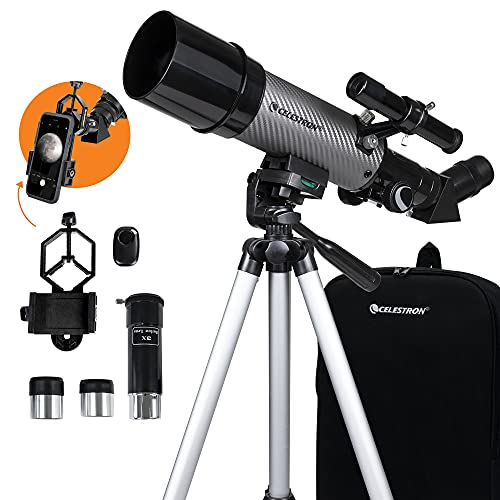
When choosing between the Celestron NexStar Evolution 6 and the Orion SkyScanner 100mm, it’s essential to consider several factors to ensure the best match for your needs.
Performance Capabilities and Features:
Recommended to our readers: Click here
The Celestron NexStar Evolution 6 boasts advanced features such as computerized GoTo mount technology, which allows for automatic alignment and tracking of celestial objects.
With a larger aperture and more sophisticated optics, this telescope excels in providing crisp views of deep-sky objects and precise observations of planets and galaxies.
Its motorized system offers convenience and accuracy, making it an excellent choice for experienced astronomers seeking high-performance capabilities.
On the other hand, the Orion SkyScanner 100mm prioritizes simplicity and user-friendly design, making it an ideal option for beginners or casual stargazers.
Despite its more basic features, such as manual tracking and alignment, this telescope offers excellent value for its affordability and ease of setup.
Its wide-field views are perfect for observing the moon, star clusters, and bright nebulae, providing an accessible entry point into amateur astronomy.
User Experience and Observational Preferences:
Consider your preferences for observing the night sky when deciding between these telescopes.
If you value convenience, precision, and the ability to explore a diverse range of celestial objects with ease, the NexStar Evolution 6 may be the right choice for you.
Its technological advancements make it well-suited for capturing detailed images of distant galaxies or conducting astrophotography.
Alternatively, if you prefer a more hands-on and immersive observational experience, the simplicity of the SkyScanner 100mm could enhance your stargazing adventures.
Its portable design and intuitive manual controls offer a more interactive approach to exploring the cosmos, allowing you to navigate the skies at your own pace and engage with celestial wonders in a direct and engaging manner.
Conclusion Beyond the Telescopes:
While the decision between the Celestron NexStar Evolution 6 and the Orion SkyScanner 100mm is crucial, remember that the telescopes are tools to facilitate your cosmic journey.
Regardless of your choice, both instruments hold the promise of unlocking the mysteries of the universe and connecting you to the vast expanse of space.
Whether you aim to delve into deep-space exploration or simply revel in the beauty of a starlit sky, the overarching goal remains the same: to foster a sense of wonder and curiosity about the cosmos that surrounds us.
Choose your telescope, embark on your astronomical