Celestron NexStar 8SE vs Sky-Watcher EvoStar 100ED: A Guide to Choosing the Perfect Telescope
In the vast expanse of the night sky, the desire to explore and unravel the mysteries of the universe beckons many of us.
To embark on this journey of stargazing and celestial observation, investing in a telescope is paramount.
Two popular choices in the realm of telescopes for amateur and intermediate astronomers are the Celestron NexStar 8SE and the Sky-Watcher EvoStar 100ED.
Both renowned for their optics and performance, these telescopes offer distinct features that cater to different needs and preferences.
Join me as we delve into the world of telescopes and compare the Celestron NexStar 8SE with the Sky-Watcher EvoStar 100ED to help you make an informed decision on which one suits your stargazing aspirations best.
Exploring the Night Sky: A Fascinating Journey
When looking up at the night sky, we are captivated by the twinkling stars, mesmerizing planets, and enticing galaxies that adorn the celestial canvas above us.
The act of stargazing is not merely an observation of distant objects in space but a profound journey of exploration and discovery.
With the aid of a telescope like the Celestron NexStar 8SE or the Sky-Watcher EvoStar 100ED, this journey becomes even more enchanting, allowing us to witness celestial wonders up close and in greater detail.
Understanding Telescope Optics and Mechanics
Telescopes, such as the Celestron NexStar 8SE and the Sky-Watcher EvoStar 100ED, rely on intricate optical systems and precise mechanical components to capture and magnify light from celestial bodies.
The Celestron NexStar 8SE, known for its advanced Schmidt-Cassegrain design, offers a versatile platform for both planetary and deep-sky observations.
On the other hand, the Sky-Watcher EvoStar 100ED boasts a high-quality apochromatic refractor design, ideal for delivering crisp and color-accurate views of celestial objects.
Feature Comparison: Celestron NexStar 8SE vs. Sky-Watcher EvoStar 100ED
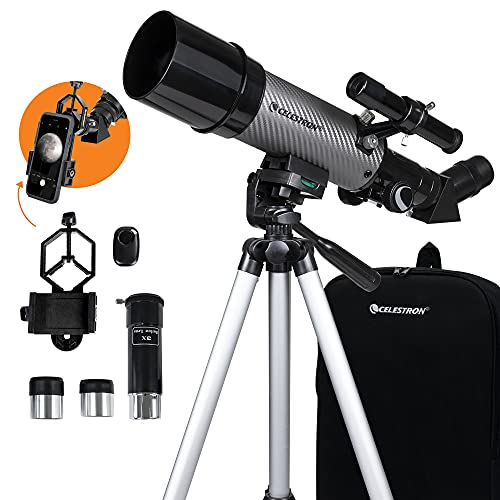

– Aperture and Magnification: The Celestron NexStar 8SE features an 8-inch aperture, providing ample light-gathering capabilities for detailed views of celestial objects.
In comparison, the Sky-Watcher EvoStar 100ED comes with a 100mm aperture, suitable for high-contrast observations and astrophotography.
– Mounting Systems: The Celestron NexStar 8SE incorporates a versatile single-arm fork mount with automated GoTo capabilities, making it easy to navigate the night sky and track celestial objects.
Conversely, the Sky-Watcher EvoStar 100ED includes a sturdy equatorial mount, offering precise tracking for extended observation sessions.
– Field of View and Portability: While the Celestron NexStar 8SE provides a wider field of view, ideal for panoramic observations of star clusters and nebulae, the compact design of the Sky-Watcher EvoStar 100ED enhances its portability, making it convenient for on-the-go stargazing adventures.
Making an Informed Decision
When choosing between the Celestron NexStar 8SE and the Sky-Watcher EvoStar 100ED
Unveiling the Celestron NexStar 8SE
The Celestron NexStar 8SE is a Schmidt-Cassegrain telescope renowned for its advanced features and user-friendly design.
Boasting an impressive 8-inch aperture, this telescope allows for detailed views of celestial objects, making it a favorite among astronomy enthusiasts.
Equipped with Celestron’s signature NexStar computerized system, the 8SE offers smooth tracking and precise alignment, simplifying the stargazing experience for beginners and seasoned observers alike.
Its portable and compact design makes it convenient for backyard observations or on-the-go stargazing adventures.
Enhanced Optics for Clear Views
Recommended to our readers: Click here
One of the standout features of the Celestron NexStar 8SE is its Schmidt-Cassegrain optical design.
This advanced system combines the light-gathering capabilities of a refractor with the compactness of a reflector.
The 8-inch aperture allows for high-resolution images of celestial objects such as planets, nebulae, and galaxies, revealing intricate details that may be missed with smaller telescopes.
The telescope’s optical coatings also enhance contrast and light transmission, ensuring crisp and clear views of the night sky.
Intelligent Go-To Mount for Easy Tracking
The NexStar computerized system sets the 8SE apart with its smart technology that simplifies the stargazing process.
Users can easily align the telescope with the sky using the built-in database of celestial objects.
Once aligned, the telescope can automatically track objects as they move across the night sky, keeping them centered in the eyepiece for extended viewing.
This feature is particularly useful for capturing sharp images through astrophotography or for studying the details of distant planets and stars.
User-Friendly Design for Seamless Observations
Despite its advanced capabilities, the Celestron NexStar 8SE is designed with user convenience in mind.
Its compact and portable construction allows for easy setup and transport to different observing locations.
The hand control unit provides intuitive navigation through the telescope’s features, making it accessible for beginners who are just getting started in astronomy.
The included StarPointer finderscope assists in locating objects in the sky, helping users to quickly point the telescope at their desired targets for immediate viewing.
Exploring the Sky-Watcher EvoStar 100ED
Recommended to our readers: Click here
In contrast, the Sky-Watcher EvoStar 100ED stands out for its exceptional apochromatic refractor design.
With a 100mm objective lens and extra-low dispersion glass, this telescope delivers high-contrast images with minimal chromatic aberration, ideal for capturing crisp views of the moon, planets, and deep-sky objects.
The dual-speed Crayford focuser enhances precision focusing, allowing astronomers to fine-tune their observations with ease.
Whether you’re into astrophotography or visual observation, the EvoStar 100ED offers versatility and performance in a sleek and robust package.
Design and Optics
The Sky-Watcher EvoStar 100ED boasts a well-crafted apochromatic refractor design, which sets it apart from other telescopes in its class.
The 100mm objective lens is a key component responsible for delivering sharp and clear views of celestial objects.
Coupled with extra-low dispersion glass, this telescope effectively minimizes chromatic aberration, ensuring that astronomers can enjoy high-contrast images with true-to-life colors.
Recommended to our readers: Click here

This optical system is particularly beneficial when observing objects like the moon, planets, and deep-sky targets where color accuracy and contrast are crucial for a rewarding viewing experience.
Versatility for Observations
Thanks to its impressive optics and design, the EvoStar 100ED is a versatile instrument suitable for both astrophotography and visual observation.
For astrophotographers, the telescope’s ability to produce crisp, detailed images with minimal aberrations makes it an excellent choice for capturing stunning photographs of celestial scenes.
On the other hand, astronomers focusing on visual observations will appreciate the telescope’s ability to reveal intricate details on the moon’s surface, the cloud bands of Jupiter, or the intricate structures of distant galaxies and nebulae.
Enhanced Focusing Mechanism
The dual-speed Crayford focuser featured in the EvoStar 100ED is a standout feature that enhances the overall observing experience.
This precision focusing mechanism allows astronomers to make fine adjustments with ease, ensuring that they can achieve optimal focus when observing different celestial objects.
Whether you are honing in on a specific crater on the lunar surface or fine-tuning the details of a planetary feature, the dual-speed Crayford focuser provides the control and accuracy needed to capture those subtle nuances in the night sky.
Robust Construction
In addition to its optical prowess, the EvoStar 100ED is housed in a sleek and robust package, making it a durable and reliable telescope for astronomers of all levels.
The telescope’s sturdy construction ensures stability during observations, reducing vibrations that can affect image quality.
This solid build quality not only protects the delicate optics inside but also enhances the overall user experience by providing a reliable platform for exploring the wonders of the universe.
Performance and Optics Comparison
When it comes to optical performance, both the Celestron NexStar 8SE and the Sky-Watcher EvoStar 100ED excel in their respective designs.
The NexStar 8SE’s Schmidt-Cassegrain optics provide excellent light-gathering capability, making it suitable for viewing distant galaxies, star clusters, and nebulae.
On the other hand, the EvoStar 100ED’s apochromatic refractor design ensures minimal color fringing, producing sharp and color-accurate images ideal for astrophotography enthusiasts.
Consider your specific interests and observing goals to determine which optical system aligns best with your astronomical pursuits.
Optical Performance:
The Celestron NexStar 8SE boasts an 8-inch aperture and is equipped with a Schmidt-Cassegrain optical design, combining a wide aperture with a compact tube.
This design not only allows for excellent light-gathering capability but also provides sharp and detailed views of celestial objects.
The Schmidt-Cassegrain design uses both lenses and mirrors to fold the light path, resulting in a longer focal length within a compact tube.
This configuration minimizes optical aberrations and enhances image quality, making it a popular choice among astronomers for its versatility and performance.
On the other hand, the Sky-Watcher EvoStar 100ED features a 100mm (3.9-inch) objective lens made from extra-low dispersion (ED) glass.
This apochromatic refractor design significantly reduces chromatic aberration, resulting in high-contrast images with true color rendition.
Astrophotographers particularly appreciate the EvoStar 100ED for its ability to capture precise and crisp images of celestial objects without the distracting color fringing often associated with refractor telescopes.
The ED glass element effectively corrects color dispersion, especially at higher magnifications, ensuring that astrophotography enthusiasts can achieve stunning results with minimal post-processing.

Both telescopes offer unique optical advantages that cater to different astronomical pursuits.
The NexStar 8SE excels in deep-sky observation, enabling viewers to explore distant galaxies, star clusters, and nebulae with impressive clarity and brightness.
Meanwhile, the EvoStar 100ED’s precise color correction and high-contrast imaging capabilities make it an excellent choice for capturing detailed planetary views and intricate lunar features, as well as stunning wide-field astrophotography shots of star clusters and nebulae.
Whether you prioritize light-gathering power for visual observation or color accuracy for astrophotography, understanding the optical features of each telescope will help you make an informed decision based on your specific interests and goals in astronomy.
Mount, Portability, and Accessories
In terms of mount and portability, the Celestron NexStar 8SE features a single-arm fork mount with integrated GPS for easy setup and alignment.
The sturdy altazimuth mount provides smooth tracking and allows for automatic slewing to celestial objects with the NexStar hand controller.

Additionally, the 8SE comes with a red-dot finder, 25mm eyepiece, and StarPointer finderscope for enhanced observation experiences.
Conversely, the Sky-Watcher EvoStar 100ED is often paired with a solid equatorial mount for astrophotography purposes, offering precise tracking capabilities for imaging the night sky.
Its compact size and lightweight design make it a portable option for astronomers on the move.
Mount and Alignment Features
The Celestron NexStar 8SE’s single-arm fork mount is not only sturdy but also allows for precise alignment through its integrated GPS system.
This innovative feature enables users to quickly set up the telescope and easily locate celestial objects without the need for manual alignment procedures.
The altazimuth mount’s smooth tracking capabilities ensure that users can effortlessly follow objects as they move across the night sky, providing a seamless observing experience.
Accessories for Enhanced Observation
In addition to its advanced mount system, the Celestron NexStar 8SE comes equipped with a range of accessories to enhance the observer’s experience.
The red-dot finder facilitates initial object sighting, making it easier to align the telescope with the desired target.
The 25mm eyepiece provides a versatile magnification level suitable for a variety of celestial observations, while the included StarPointer finderscope offers additional precision when locating specific objects in the sky.
Sky-Watcher EvoStar 100ED for Astrophotography
On the other hand, the Sky-Watcher EvoStar 100ED is frequently paired with a robust equatorial mount to cater to the specific requirements of astrophotography enthusiasts.
The equatorial mount offers precise tracking capabilities necessary for capturing long-exposure images of celestial objects with minimal trailing.
This setup is ideal for capturing detailed views of planets, galaxies, and nebulae, making the Sky-Watcher EvoStar 100ED a popular choice among astrophotography enthusiasts.
Portability and Convenience
Despite its specialized astrophotography capabilities, the Sky-Watcher EvoStar 100ED remains a portable option for astronomers who are constantly on the move.
Its compact size and lightweight design make it easy to transport to different observing locations, allowing users to set up their equipment quickly and start imaging the night sky efficiently.
This portability factor is particularly advantageous for astrophotographers who travel to remote or dark-sky locations to capture stunning astronomical images.
Price Point and Overall Value
When considering the Celestron NexStar 8SE vs.
Sky-Watcher EvoStar 100ED, price plays a significant role in the decision-making process.
While the NexStar 8SE is priced competitively for its advanced features and user-friendly interface, the EvoStar 100ED’s apochromatic refractor design commands a higher price for its premium optics and versatility.
Ultimately, it boils down to your budget, observing preferences, and long-term goals in astronomy.
Both telescopes offer excellent value for money and cater to different niches within the astronomical community, whether you’re a beginner looking to explore the cosmos or a seasoned observer seeking to expand your stargazing horizons.
Factors Influencing Price Point
When comparing the Celestron NexStar 8SE and the Sky-Watcher EvoStar 100ED, it’s important to delve deeper into the factors that contribute to their price points.
For the NexStar 8SE, its price is reflective of its high-tech features such as the computerized GoTo mount and database of celestial objects, making it a popular choice for those seeking advanced technology at a reasonable cost.
On the other hand, the EvoStar 100ED’s higher price tag is justified by its premium apochromatic refractor optics, which deliver superior color correction and sharp imagery ideal for astrophotography and detailed observations.
Value Beyond Price
While price is a significant consideration, it’s also essential to evaluate the overall value that each telescope offers.
The NexStar 8SE’s value lies in its ease of use and convenience, appealing to beginners and casual observers who prioritize accessibility and simplicity in their stargazing experience.
In contrast, the EvoStar 100ED’s value extends to its exceptional optical performance and versatility, making it a top choice for dedicated astronomers and astrophotographers who demand uncompromising quality in their equipment.
Long-Term Investment Potential
Another aspect to consider when weighing the price and value of these telescopes is their long-term investment potential.
The NexStar 8SE’s affordability coupled with its robust construction and upgradability make it a smart choice for individuals looking to start their astronomy journey with room to grow and expand their setup over time.
Conversely, the EvoStar 100ED’s premium optics and build quality position it as a long-term investment that can cater to the evolving skills and interests of experienced observers who value performance and precision in their equipment.
Recommended to our readers: Click here
Conclusion: Choosing Your Celestial Companion
As we wrap up our exploration of the Celestron NexStar 8SE and the Sky-Watcher EvoStar 100ED, it’s essential to consider your individual needs and preferences when selecting a telescope.
Whether you prioritize portability, optical performance, or astrophotography capabilities, both telescopes have unique strengths that cater to a diverse range of astronomy enthusiasts.
The NexStar 8SE’s user-friendly design and advanced features make it an excellent choice for backyard observers and beginners, while the EvoStar 100ED’s premium optics and versatility cater to astrophotography enthusiasts and visual observers alike.
Recommended to our readers: Click here
Whichever telescope you choose, may it serve as your celestial companion on countless stargazing adventures, unveiling the wonders of the universe one star at a time.
Consider Your Observing Environment and Goals
When choosing between the Celestron NexStar 8SE and the Sky-Watcher EvoStar 100ED, take into account your observing environment and goals.
Recommended to our readers: Click here
If you live in a light-polluted area and prioritize portability for quick setup in different locations, the NexStar 8SE’s compact size and automated GoTo mount are ideal.
On the other hand, if you have a dedicated observing spot with darker skies and seek the best possible visual clarity and image quality, the EvoStar 100ED’s premium optics and large aperture make it a top contender.
Tailoring Your Telescope to Your Interests
Consider aligning your telescope choice with your specific astronomical interests.
If you are primarily interested in observing the planets, moon, and brighter deep-sky objects visually, the NexStar 8SE’s tracking capabilities and pre-programmed celestial database will enhance your viewing experience.
However, if you aspire to delve into astrophotography and capture stunning images of nebulae, galaxies, and star clusters, the EvoStar 100ED’s apochromatic refractor design and smooth focusing system provide the foundation for high-quality imaging.
Evaluating Ease of Use and Learning Curve
Delve into the user experience of both telescopes to assess their ease of use and learning curve.
The NexStar 8SE’s intuitive hand controller and StarSense technology simplify the alignment process for beginners, reducing frustration and allowing for more time spent observing celestial wonders.
In contrast, the EvoStar 100ED’s manual focusing and robust equatorial mount may require a steeper learning curve, but offer advanced users greater precision and control over their observing sessions.
Building Your Astronomy Kit
Remember that acquiring a telescope is just the beginning of your astronomy journey.
Consider additional accessories and equipment that complement your chosen telescope model, such as eyepieces, filters, astrophotography adapters, and star charts.
Building a comprehensive astronomy kit tailored to your telescope and observing goals will enhance your stargazing experiences and help you make the most of your investment in astronomical gear.
Finding Your Celestial Companion
Ultimately, selecting a telescope is a personal decision that reflects your unique preferences, aspirations, and budget.
Whichever celestial companion you choose, whether it’s the user-friendly NexStar 8SE or the versatile EvoStar 100ED, it will undoubtedly open new horizons and ignite your passion for exploring the cosmos.
Let your telescope be the gateway to a universe